Bitterness from Afar
Hops
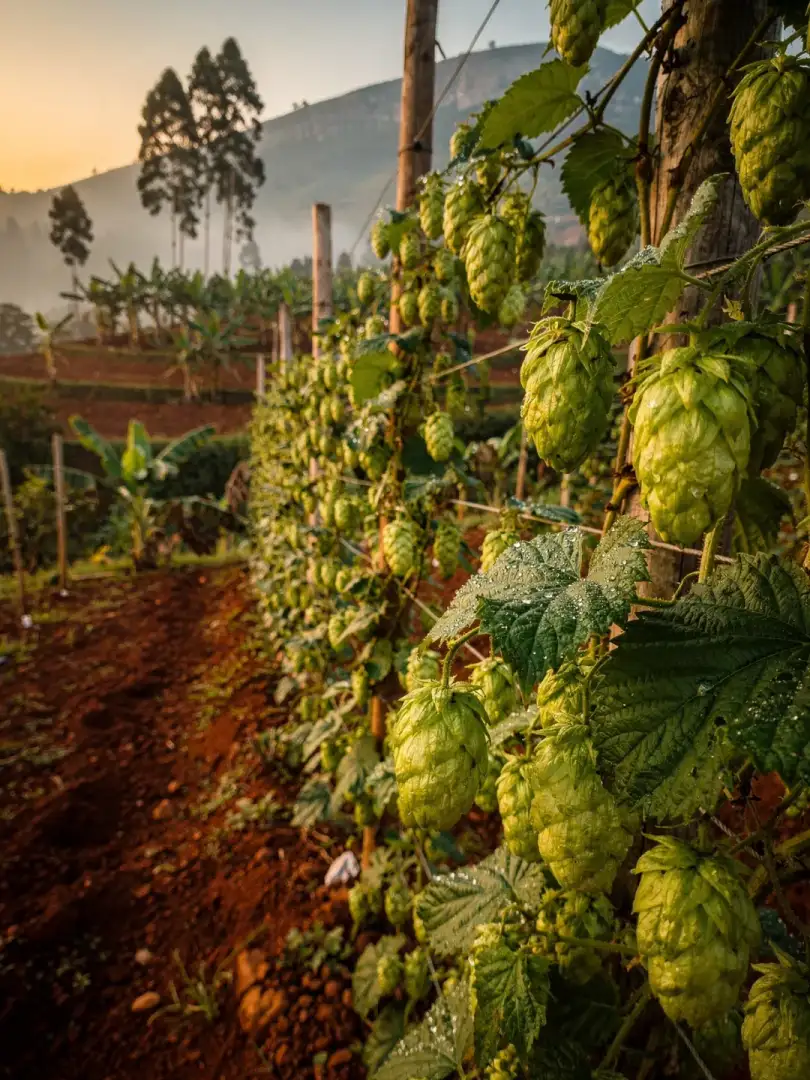
Does hops grow in Kenya? As a crop, it plays no role in the country. Hops is a climbing plant of the temperate zones and needs long summer days to form cones. Near the equator, where day and night are roughly equal length year-round, this hardly works, which is why the world's great beer-growing countries lie almost entirely further north or south.
Brewers in Nairobi therefore work with hops sourced from far away. Those making a pale lager mostly use varieties or extracts that deliver a mild, clean bitterness with little aroma. That suits a beer meant to be drunk chilled outdoors to quench thirst.
Hops serve two purposes in brewing. Boiled for a long time, it provides bitterness and keeps the malt's sweetness in check. Added late in the kettle or later still in the cask, its aroma survives, which can smell of citrus, grass, or pine. A lager like Tusker relies on the first role, while a craft IPA like Bila Shaka's relies on the second.
Visitors to small breweries in Nairobi can taste the difference. The aroma of fresh hop oils becomes a selling point for craft beer, and brewers must carry it over long distances and through the heat. Chilled storage and short supply chains matter more to them than they do in Bavaria or Bohemia.
Traditional home beers like Busaa get by without hops entirely. Their shelf life is short, their flavor sour and starchy. Here, it is the acidity from fermentation that keeps the drink stable for a few days, not the bittering compounds of the hop cone.