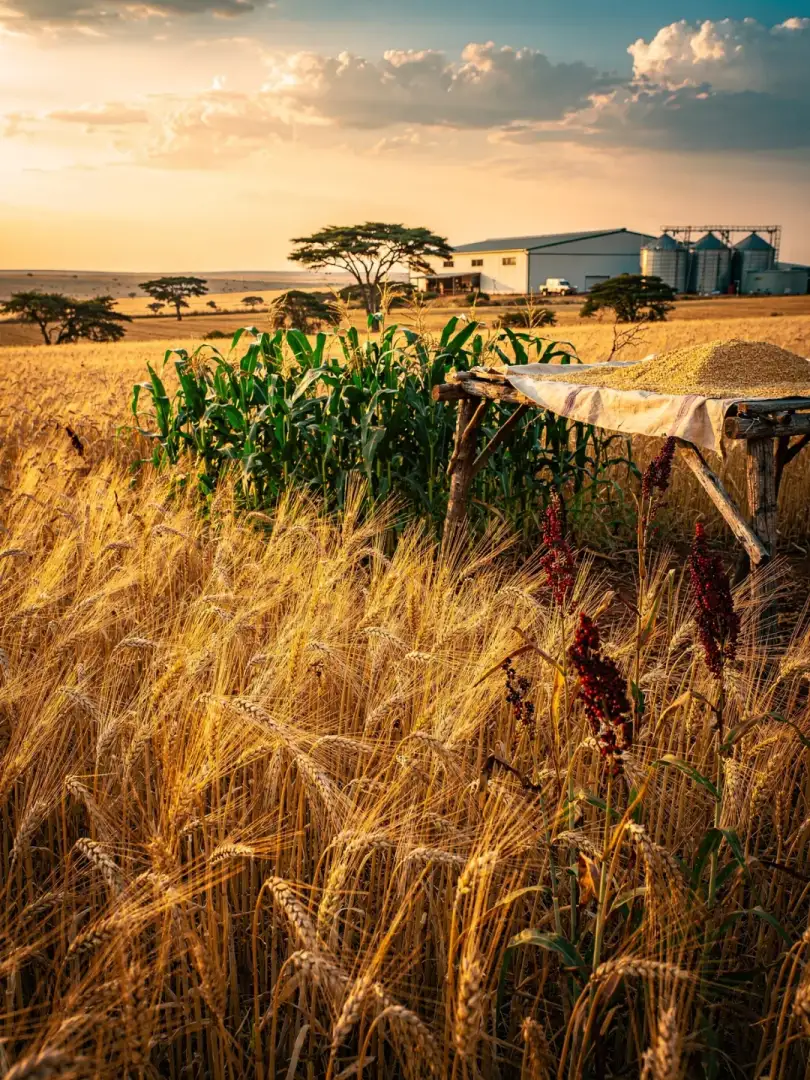
Barley, Sorghum, Maize
Malt & Grain
What grain is beer brewed from in Kenya? Several, in fact. Barley is the base for lagers like Tusker, and according to business media reports, East African Breweries sources it from farmers in Narok, Nakuru, Uasin Gishu, and Meru. These are the cooler, higher-altitude regions where brewing barley thrives.
Barley becomes malt before it can go into beer. The grains are allowed to germinate so their starch can convert into fermentable sugar, and germination is then halted by drying. Pale malt yields a pale, mild beer, and that is exactly the typical style of lager found in Nairobi.
Sorghum, a type of millet long grown as a food crop in Kenya, has its own story here. In 2009, EABL began using sorghum for an affordable beer called Senator Keg. According to newspaper reports, tens of thousands of smallholder farmers are under contract for this, receiving seed and advice from the company. In this way, a locally grown crop replaces part of the expensive barley malt.
Maize is woven into daily life across the region. As Ugali, it appears on the plate, and as Busaa, it becomes a drink: a thick, cloudy maize beer that home brewers prepare and drink within a few days. In a study of traditional beverages in Western Kenya, its alcohol content averaged around four percent. It is beer in the sense of fermented grain, but without filtration, bottle, or label.
Anyone wanting to understand malt in Kenya finds two sides to the story: the industrial brew from barley malt and the small-scale kitchen brewing from maize. Both share the same principle. Starch turns into sugar, and yeast turns that into alcohol.