Lager Yeast in the Heat
Yeast & Fermentation
Beerlao is a lager, meaning a bottom-fermented beer. Bottom-fermented means the yeast sinks to the bottom after fermentation and works at cool temperatures, usually in the single digits to low double digits Celsius. Top-fermenting yeast ferments warmer and floats on top.
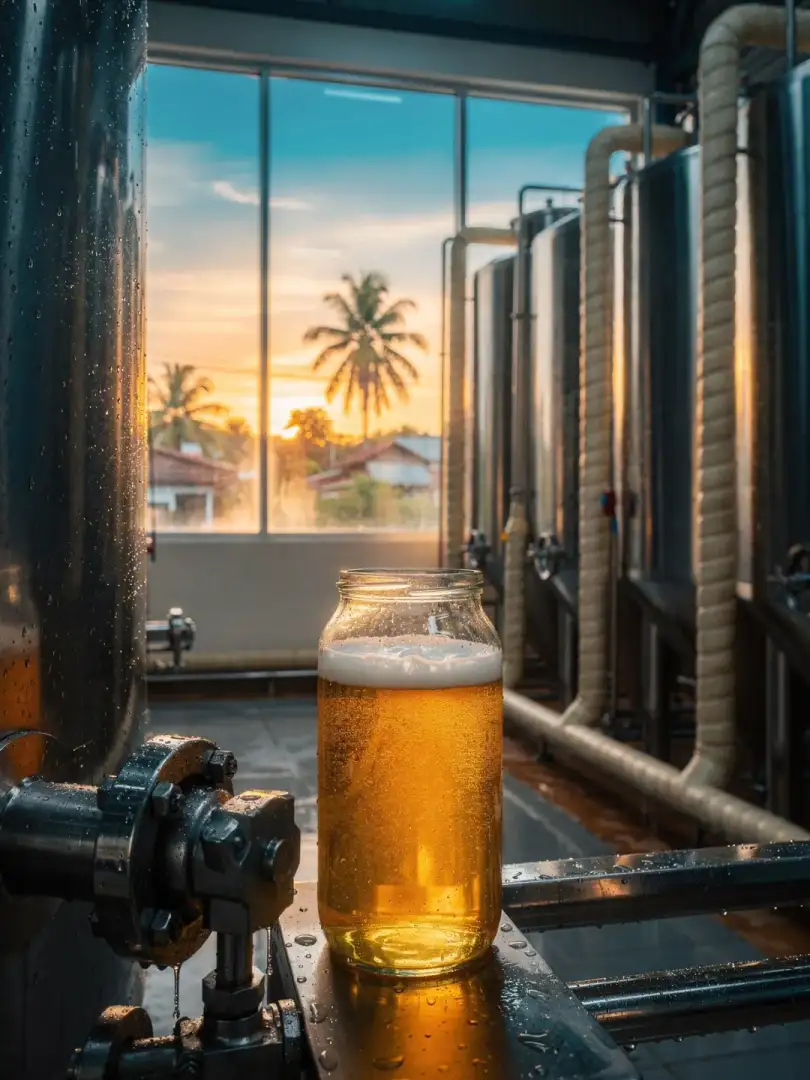
That's precisely the challenge in Vientiane, and also why the city takes ice so seriously. Outside it's often over 30 degrees, yet lager yeast wants it cool. The brewery and its fermentation cellars therefore need refrigeration around the clock, a tradition the city has carried in its company name from the start: BGL's "glacières" were ice factories.
Lager yeast is scientifically known as Saccharomyces pastorianus. It's a hybrid of two species, the brewer's yeast Saccharomyces cerevisiae and Saccharomyces eubayanus, a species only identified in Patagonia in 2011. Such a yeast was first isolated in pure culture in 1883 by the Dane Emil Christian Hansen at the Carlsberg laboratory in Copenhagen.
Carlsberg has held a stake in Lao Brewery since 2005, so the Hansen story has a link to Vientiane. According to the brewery, Beerlao's yeast comes from Germany, where bottom-fermenting yeast has been cultivated for centuries.
After primary fermentation, a lager matures further in cold tanks. During this process the beer clarifies, and fermentation byproducts such as a buttery aroma are broken back down by the yeast. In a beer made with rice, which brings little flavor of its own, such off-notes would stand out immediately, which is why clean fermentation matters here more than variety.