Desert & Coast
Water & Soil
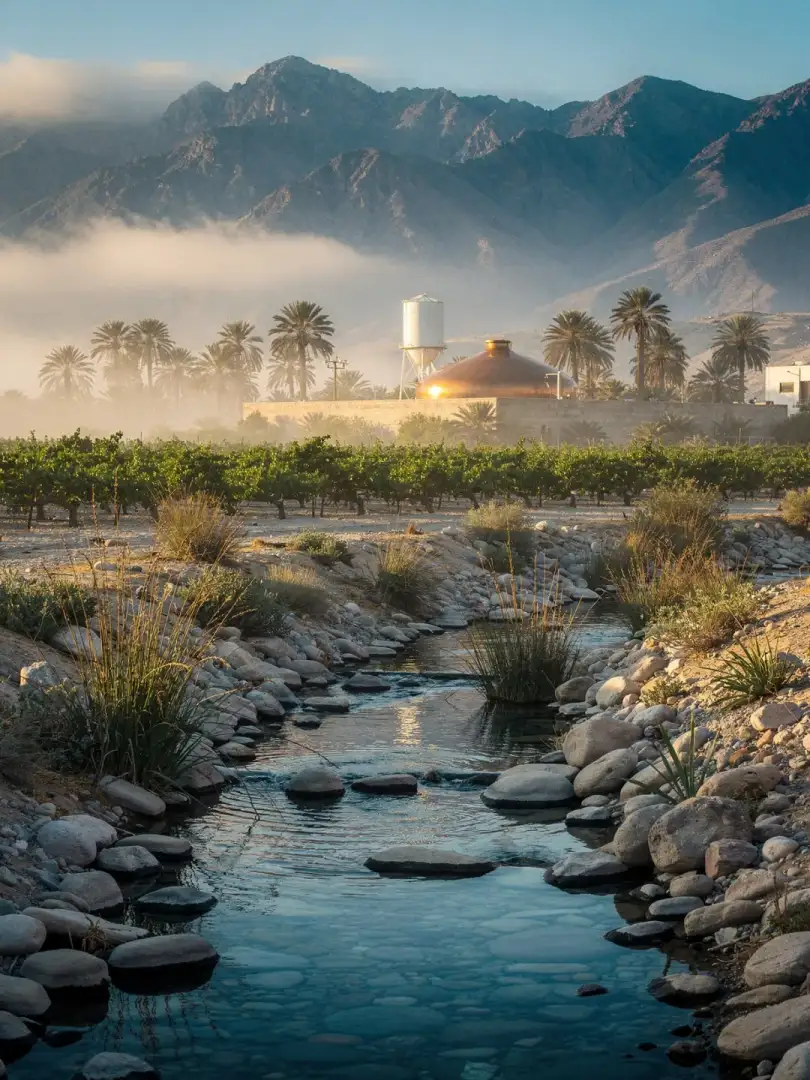
Where does the brewing water come from in one of the driest corners of North America? The answer depends on where you stand. Mexicali lies in the Colorado River delta, where summer temperatures regularly climb past 40°C (104°F), and the water comes from the river and its canals.
Tijuana draws much of its drinking water via an aqueduct from the Colorado River. The river water is soft to medium-hard but contains salts that brewers often filter out before mashing. Exact hardness levels vary by season and pipeline, and every brewery tests its own water.
Ensenada sits on the Pacific, with the Sierra Juárez mountains and the wine country rising just behind it. Coastal fog keeps the city cool even in peak summer, a real advantage for fermentation. Groundwater is scarce and shared among winemakers, farmers, and the city, so frugality is part of the brewing craft here. Some brewers capture condensation from their cooling systems or reuse rinse water. It takes extra effort, but it pays off in a region where rain can be absent for months at a time.
Baja has no tradition of beer cellars like those in Franconia or Belgium. Beer is stored in temperature-controlled stainless steel tanks and cold rooms, often right behind the taproom.
This water typically produces lean, clean beers. Brewing a classic Mexican lager calls for soft, neutral water so nothing disturbs the malt's delicate sweetness. For a West Coast IPA, though, brewers add mineral salts to sharpen the bitterness and give it a clean, dry edge.