Barley, Corn, Wheat
Malt & Grain
Mexican lager starts with barley grown further south in the highlands, in regions like the Bajío and Hidalgo, not in the Baja California desert. The grains are malted: they're allowed to sprout so their starch converts into fermentable sugar, then the sprouting is halted in the kiln, a warm drying chamber.
Large brewers like Tecate often add corn alongside barley malt. Corn lightens a beer, making it leaner and more delicate in body, which explains why Mexican lager tends to be so easy-drinking and shows barely any bread-like character. You can learn more about this under beer styles.
Craft brewers from Ensenada to Mexicali, by contrast, rely on pale malt and pilsner malt as their base. They add pale caramel malt for sweetness and color, along with a small percentage of wheat. Many breweries buy their malt from Mexico, the US, or Europe, since running an in-house malthouse rarely makes sense for a small operation.
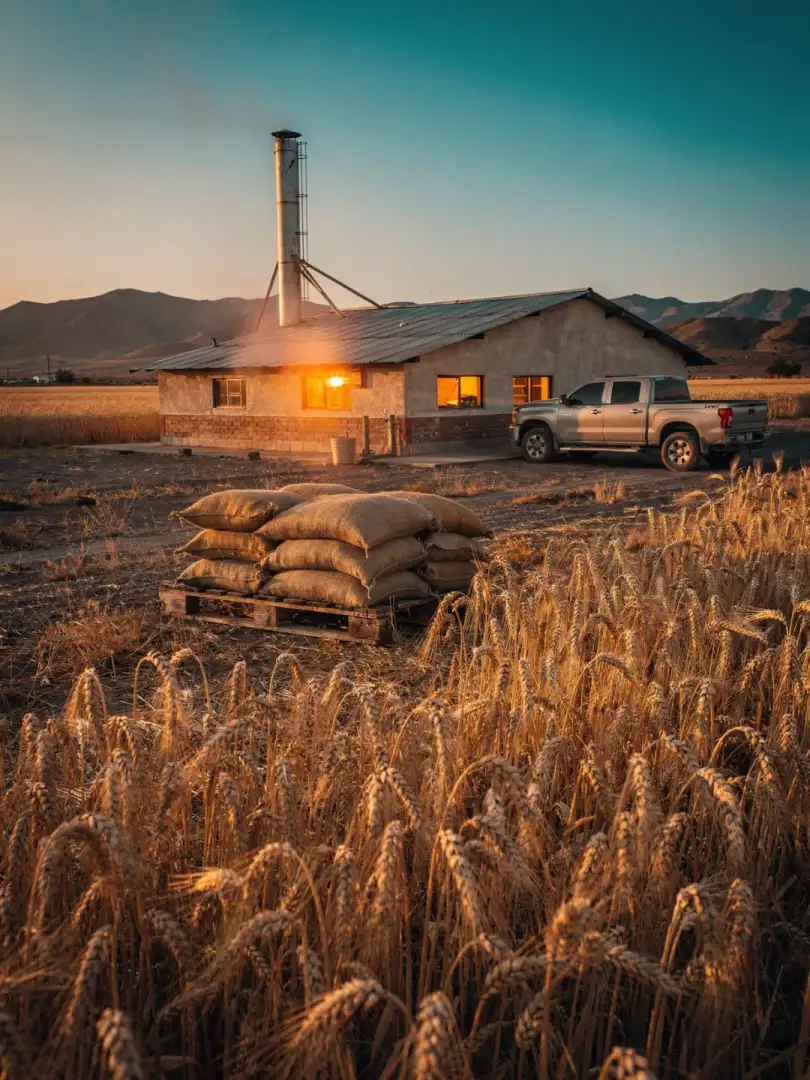
The Mexicali Valley, meanwhile, is famous for wheat that grows there in winter. It finds its way into some recipes as wheat malt or unmalted grain, giving the beer a full, lasting head. If you look for it, you can taste the journey from the delta fields straight to the glass.
Smoked malt or special kilning methods aren't a hallmark of Baja. What matters here is a pale, clean base that lets hops and yeast shine. Dark malts for stout or porter are roasted more heavily, producing notes of coffee and cocoa, but they remain the exception on the brewing schedule.