Cold from Machines
Yeast & Fermentation
The beers of Cervecería Cuauhtémoc Moctezuma are bottom-fermented. Bottom-fermenting yeast works at low temperatures, usually between 8 and 12 degrees Celsius, and settles at the bottom of the tank once fermentation is done. The yeast used in these lagers, Saccharomyces pastorianus, is a hybrid of two yeast species.
That this technique took hold in Monterrey is tied to the founding year. The Dane Emil Christian Hansen had isolated the first pure culture of a bottom-fermenting yeast at the Carlsberg laboratory in 1883. By the time Cuauhtémoc began in 1890, a clean, consistent yeast was already possible.
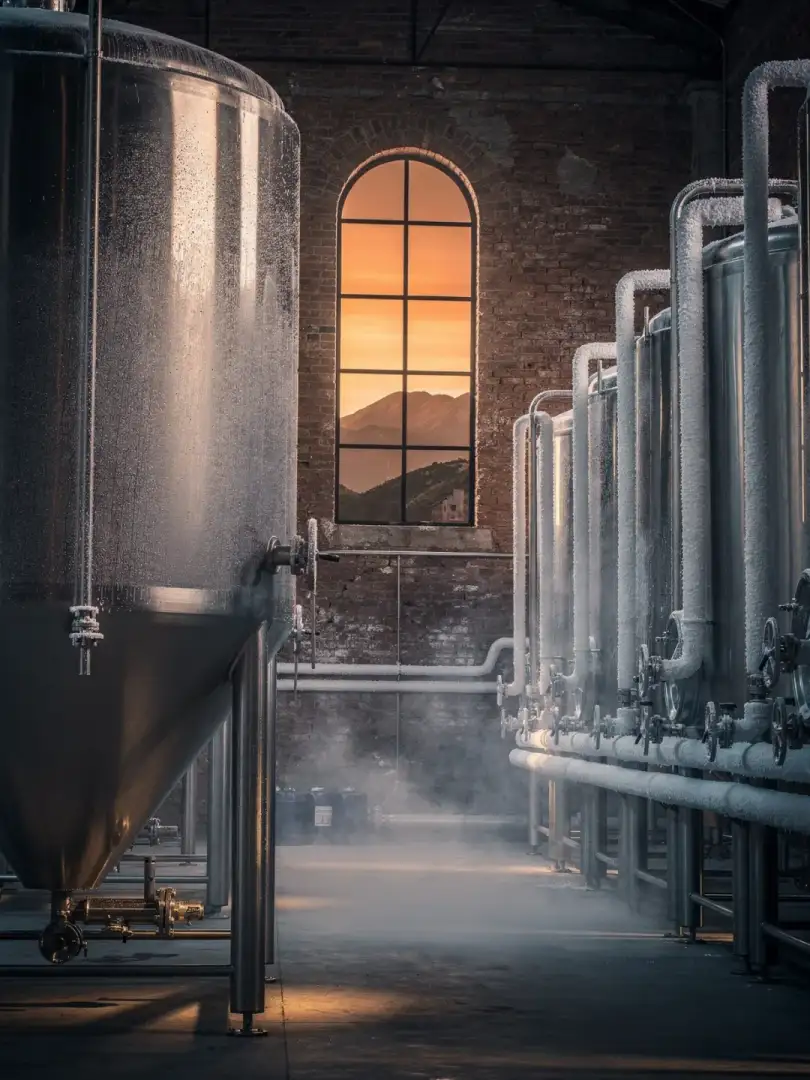
Cooling is the decisive factor here. There are no cellars cut into rock, so machines chill the tanks instead. That fits the company's history, since the brewery began as an ice and beer factory. Today, beers of this scale ferment in closed steel tanks that taper to a cone at the bottom, so the yeast can be easily drawn off.
After primary fermentation, the young beer matures for a time at temperatures near freezing, a process called lagering. During this time, haze particles settle out and unwanted fermentation byproducts disappear. How long this takes for the major brands is not disclosed. Industrial lagers typically mature for a shorter time than classic, small-batch breweries allow.
Which yeast strains the brands use is a trade secret. Good pure-culture yeast means every batch tastes like the last one, and that's exactly what's expected when someone grabs a bottle from the fridge. In the end, the beer is filtered, the yeast is removed, and that's why Carta Blanca and its relatives pour clear.