From Afar
Hops
Hops don't grow in Monterrey. The plant needs long summer days in temperate latitudes and plenty of water, and the semi-arid north of Mexico offers neither. The hops used in the region's lagers, whether Carta Blanca or other brands from Cervecería Cuauhtémoc Moctezuma, therefore come from abroad, typically from the major growing countries. Unlike barley, hops travel well over long distances when dried, pressed, or turned into extract.
The two largest producers are Germany with 18,962 hectares and the US with 17,057 hectares (2025 harvest). Worldwide, 52,660 hectares were under hop cultivation in 2025, according to the BarthHaas report. Which origin the breweries in Monterrey use is not disclosed. For flavor, what matters is variety and harvest, not the place where the wort is eventually boiled.
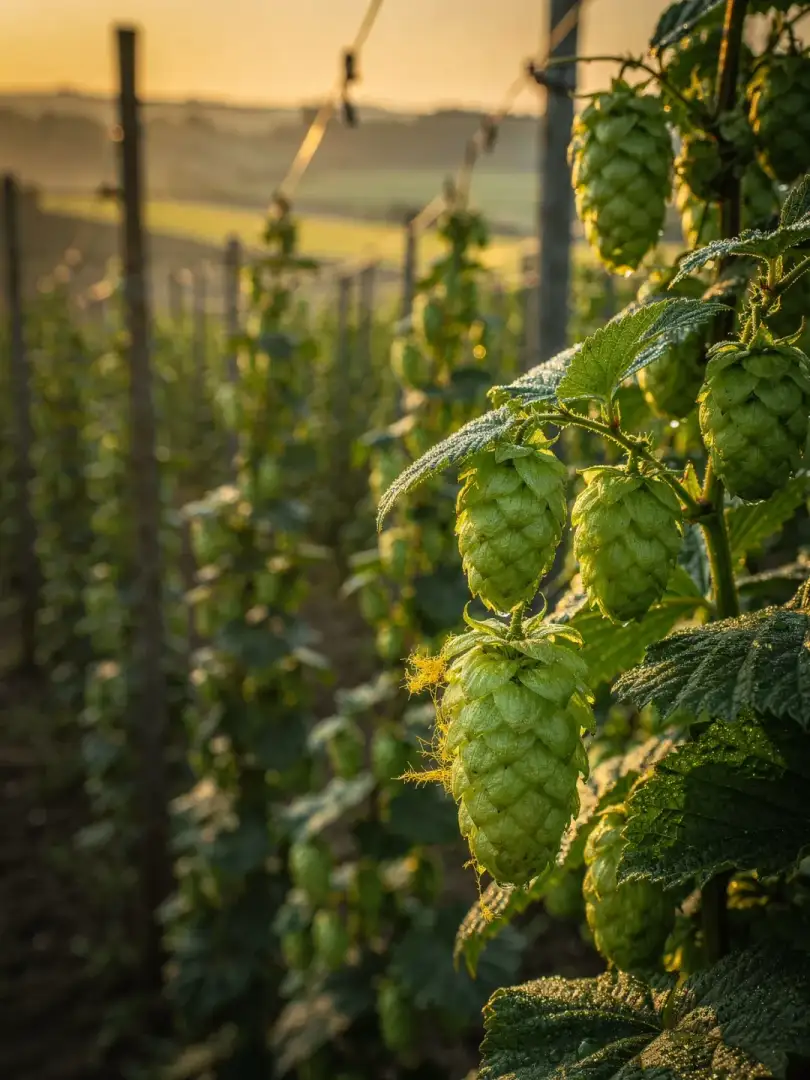
What does beer need hops for anyway? The cones supply bittering compounds that balance the malt sugar, along with oils that smell of flowers, herbs, or citrus. They also help preserve the beer. Bittering hops go into the wort, the boiled sugar solution, early on, while aroma hops are added late so their scents don't evaporate.
Bitterness is measured in IBU, a unit for the amount of bittering compounds. For international pale lagers, the style guidelines call for 18 to 25 IBU. A German Pilsner sits noticeably higher, at 22 to 40. In Monterrey, hops therefore stay in the background.
That suits the climate. Anyone drinking something cold at 35 degrees doesn't want strong bitterness on the palate, but rather a drink that quenches thirst. The big brands are built for exactly that.