Cool and Bottom-Fermented
Yeast & Fermentation
Corona, Modelo Especial, Victoria, and Negra Modelo are bottom-fermented lagers. Bottom-fermented means the yeast works at cool temperatures and sinks to the bottom at the end of fermentation. Typical temperatures run about eight to twelve degrees Celsius, considerably cooler than for top-fermented ales.
Lager yeast, Saccharomyces pastorianus, is a hybrid of two yeast species. One parent, Saccharomyces eubayanus, was only identified in Patagonia in 2011. Lager yeast is therefore much older than its discovery, yet remains a fairly recent scientific finding.
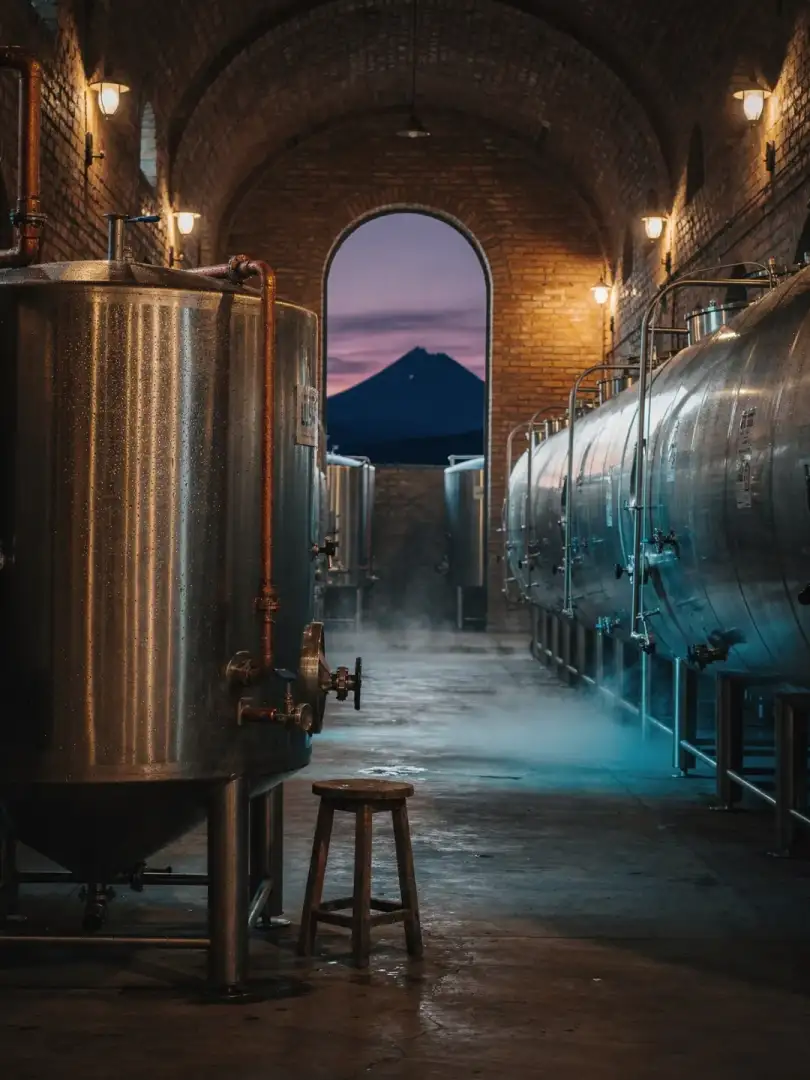
After primary fermentation, the beer matures in a lagering tank. There, sediment settles out, rough aromas fade, and the beer becomes clear and clean. This process is called lagering, which gives lager beer its name. In the tank, the beer stays cold until it has become clean and clear. Only then is it bottled. There's no fixed duration for this—it depends on the beer and the brewery.
Yeast plays a quiet but essential role here: it converts the malt sugar in the wort into alcohol and carbon dioxide. To achieve a lean lager like Modelo Especial, fermentation is kept cool and clean, since warmth would introduce fruity side notes that no one expects in a pale Mexican lager.
The capital's small breweries also mostly use stainless steel tanks rather than open vessels or wooden barrels. Their flexibility lies in yeast selection: to brew an ale, they use top-fermenting yeast and ferment at room temperature, which speeds up the whole process.