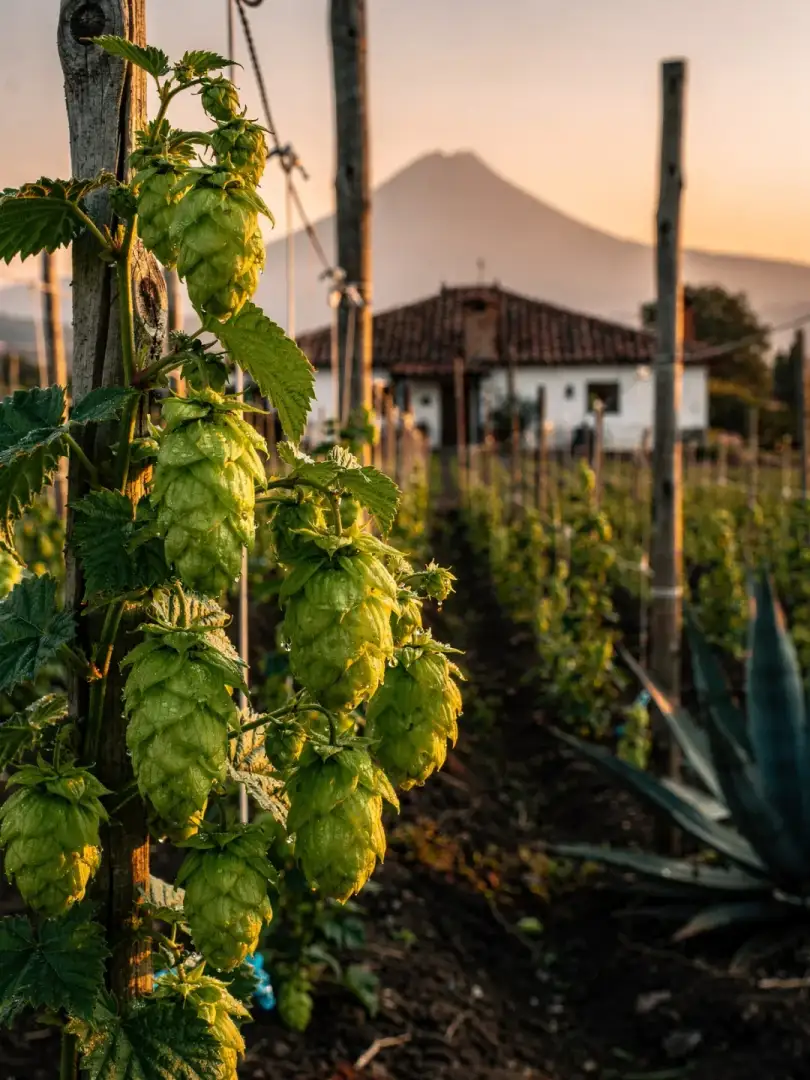
Restrained hopping
Hops
Hops barely grow in Mexico. Breweries source them from overseas, which suits the role hops are meant to play here: a supporting act, not the star.
The style guidelines for international pale lager call for 18 to 25 bitterness units (IBU). That number shows how much bitter hop compound is in the beer. A German Pils often sits well above that, as does a Bohemian Pilsner. Mexican lagers get by with very little, because they're drunk ice-cold. Cold suppresses bitterness and aroma, leaving a clean, dry sip.
To understand the differences, it helps to separate the two jobs hops do. First, they provide bitterness that offsets the sweetness of the malt, and second, they contribute aroma, which can suggest herbs, flowers, or citrus. In a pale Mexican lager, both take a back seat. The aroma usually comes from what's added to the glass—lime and salt.
The capital's small breweries take a different path. Operations like Monstruo de Agua or Cru Cru brew more varied beers than the big corporations, including hoppier ones. Aroma matters there, and anyone asking a cantina for more bitterness is more likely to find it from these brewers.
For everyday cantina drinking, the light beer remains the choice—one you finish quickly and order again, without the bitterness wearing you down. It leaves plenty of room for chili, lime, and salt, which is exactly the point.