Highlands and Fog Coast
Water & Soil
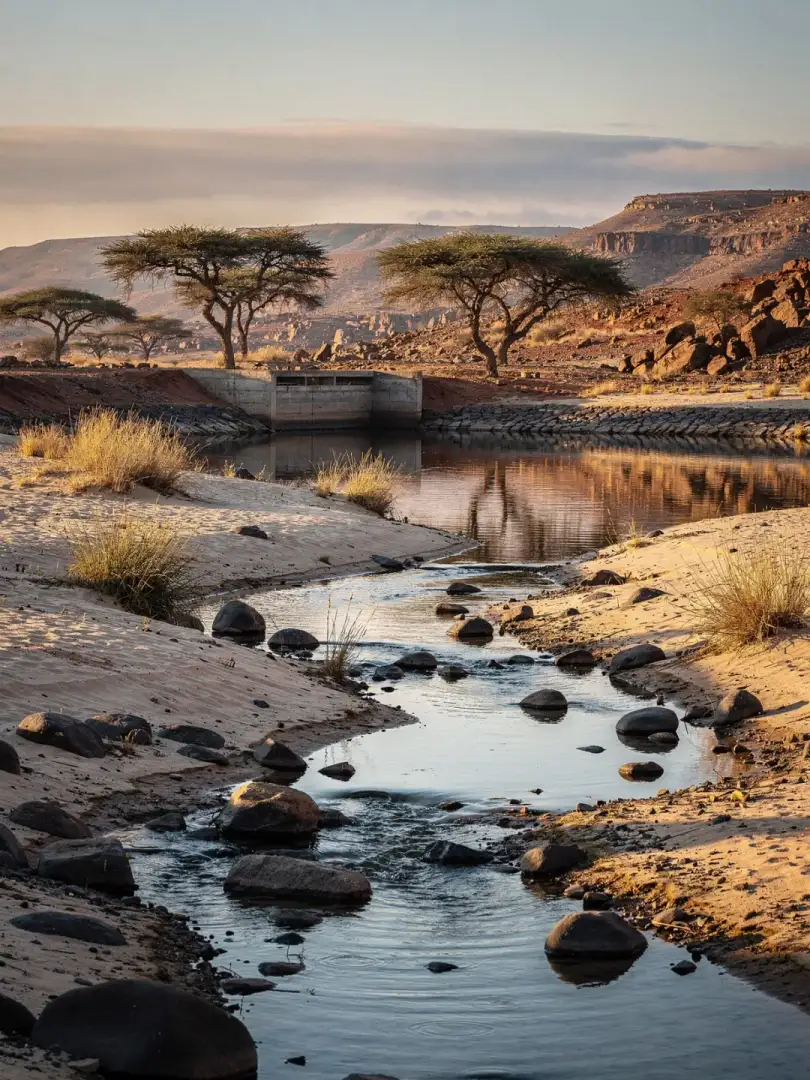
Where does the water for brewing come from in one of the driest countries south of the Sahara? Namibia receives very little rainfall, and its rivers typically only flow after thunderstorms. Windhoek sits at over 1,600 meters in the Khomas Highland, and the city relies on reservoirs, boreholes, and careful water management.
Windhoek is known for a particular distinction: since 1968, the city has treated wastewater to the point where it can be reintroduced into the drinking water supply — a clear sign of just how scarce water is here. For brewers, this means accounting for every liter, from mashing to tank cleaning. At Namibia Breweries too, careful and efficient water use and reuse are a top priority.
What water does to beer depends largely on its dissolved mineral content. Soft water gives hops a milder character, while hard water rich in carbonates sharpens bitterness and can make pale beers taste heavier. Brewers everywhere navigate this, including in Windhoek, where water can be treated and adjusted before brewing begins.
The coast offers an entirely different picture. In Swakopmund, the Namib Desert meets the cold Benguela Current of the Atlantic. Morning fog often blankets the town, the air stays cool, and rain is a rarity. This climate once made it somewhat easier for Swakopmund's early brewers to keep beer cool, even as inland summers turned hot.
There are no natural rock cellars here like those found in Franconia. Lager beer instead matures in chilled stainless steel tanks, and cold temperatures remain the real key to brewing a clean lager.