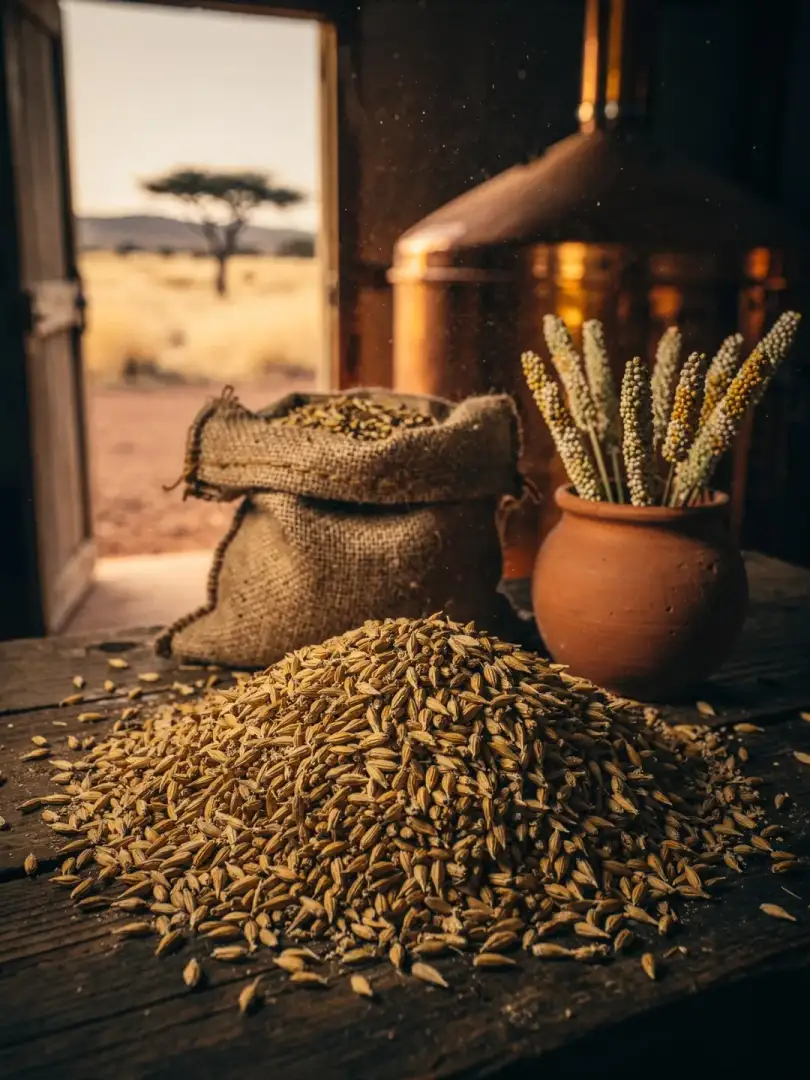
Barley Malt, Mahangu
Malt & Grain
Barley malt forms the backbone of Namibia Breweries' beers. According to the manufacturer, Windhoek Lager has been brewed since the 1920s following the German Reinheitsgebot (Purity Law) — using only water, barley malt, and hops. This is a producer's claim rather than a certified seal, and unlike in Bavaria, no Namibian law mandates this ingredient list.
Malt is produced when brewing barley swells in water and briefly germinates. During this process, the grain develops enzymes that later convert starch into sugar. Kilning then halts germination: warm air dries the grain. The hotter the kiln, the darker and more toasted the malt becomes. Pale lager requires lightly kilned malt, which tastes mild and faintly sweet.
Grain farming is only possible in a few parts of Namibia, limited by the scarcity of water. Brewing barley is therefore a raw material whose sourcing remains a logistical question for the country's brewing industry. There's no regional malt profile here comparable to Franconian or Bohemian beers. To understand the beer, it helps to look less at the fields and more at the brewery and its craft: mashing, lautering, boiling. During mashing, hot water extracts malt sugars from the crushed grain; during lautering, the clear wort is separated from the husks.
Sorghum tells a different story. In the north of the country, families grow mahangu, or pearl millet. From it come traditional beverages like the mild oshikundu and the more strongly fermented tombo. These have little in common with the lager brewed in Windhoek, but they show that fermentation in Namibia predates German colonial rule by far.