Barley, Kiln, Roasting
Malt & Grain
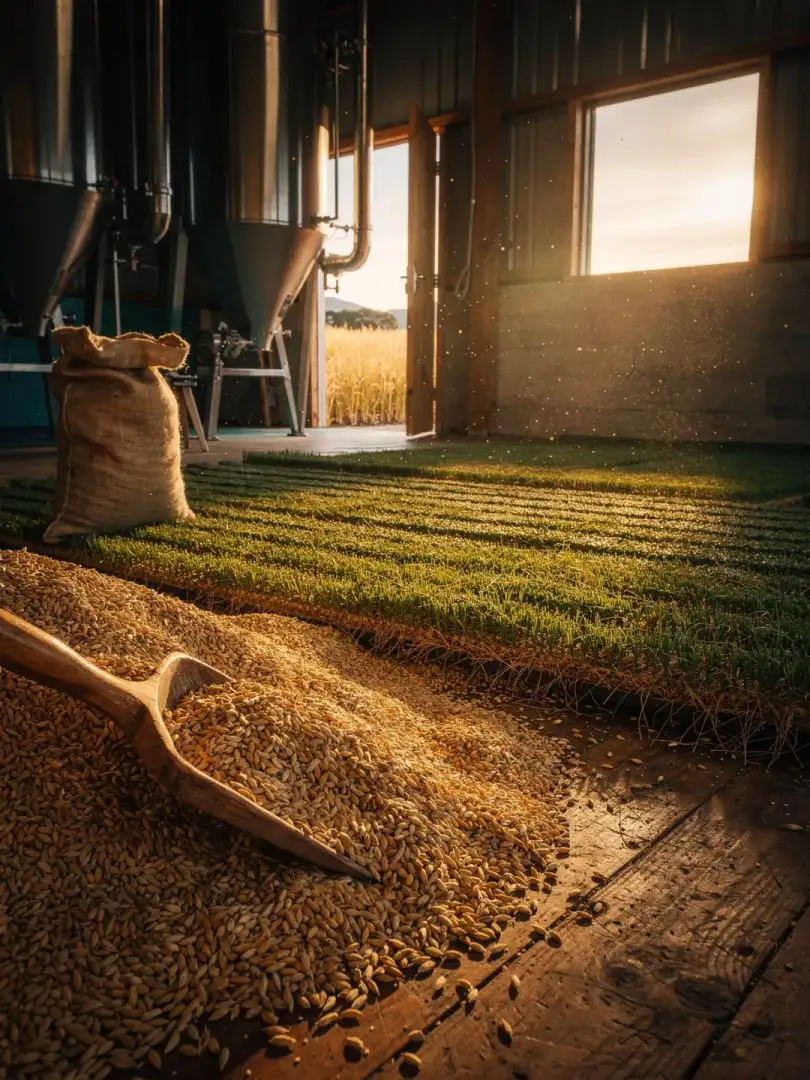
When it comes to malt, Nelson is a consumer, not a world champion. The malt comes from maltings that turn brewing barley into what a brew needs: barley is germinated and then kilned, that is, dried with warm air, to halt the sprouting and keep the starch accessible. The hotter the kiln, the darker and more roasted the malt.
Mac's shows just how important malt is in the glass. The McCashins' brewery in Stoke, a suburb of Nelson, was called Brewery and Malthouse. Much of its beer was brewed following the pattern of the German Reinheitsgebot, according to industry sources, with just four ingredients: barley malt, hops, yeast, and water. In 1981 New Zealand, that was a statement against the sugar and caramel coloring used by the big brands.
Golden Mac's Gold shows what a pale malt body looks like: little roast, bread crust, a touch of honey. Black Mac, said by sources to be New Zealand's first dark lager of a new generation, is marked by a roasted malt that contributes coffee and cocoa notes without burning. In between sits Mac's Real Ale, a blend of both. A roasted note in the malt here isn't a flaw but an intention, as it balances the freshness of the hops and rounds out a dark lager.
Modern Pale Ales and hazy IPAs from the region often rely on a simple pale malt as the stage, sometimes with oats or wheat for a soft body and the hazy look. Here, the malt isn't meant to stand out; it carries the hops. The less sweetness it brings, the more the fruit of Nelson Sauvin comes through. Brewers in the region therefore usually choose malt based on what it doesn't do: it shouldn't cling or mask the hop aroma.