Warm-Fermented
Yeast & Fermentation
Most beers from Wellington are top-fermented, meaning the yeast works warm and collects at the top of the fermentation tank. Typical temperatures run around 18 to 22 degrees Celsius, at which the yeast produces fruity aromas, called esters, alongside alcohol.
This fruitiness complements the hops. In a Hazy IPA it heightens the impression of peach, pineapple, or orange; in a classic Pale Ale it stays more subdued. Which yeast strain gets used is each brewery's own choice.
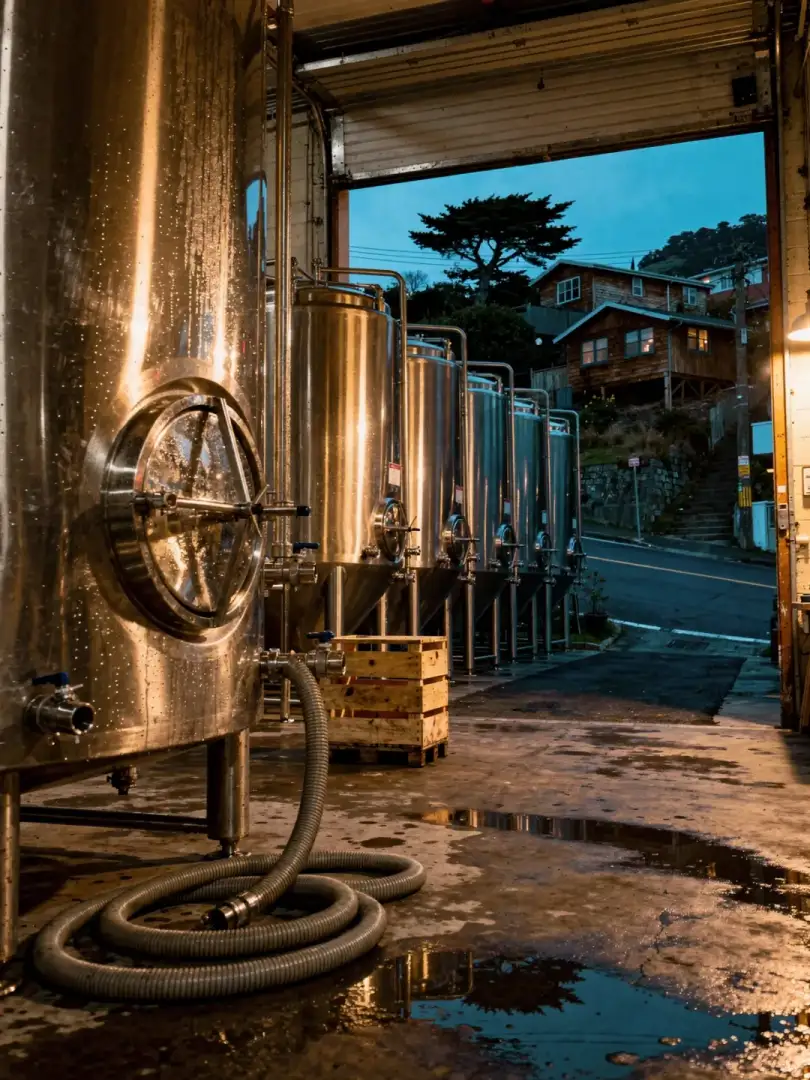
Fermentation happens in stainless steel tanks, usually in the same room as the taproom. Primary fermentation typically takes about a week, after which the beer conditions for a few more days to let the flavors settle. Dry hopping happens during this phase, with hops added directly to the tank.
Garage Project shows how far this can be pushed. With the "24 Beers in 24 Weeks" series, the brewery released 24 new beers in 24 weeks, each with its own recipe. Many yeast strains and fermentation regimes run side by side in a small brewhouse to make that happen.
Lager exists in Wellington too. It ferments cooler, around 8 to 12 degrees, and then conditions for weeks near freezing point, which is why it tastes clearer and milder.
Yeast is a fungus that consumes sugar and produces alcohol and carbon dioxide in the process. Whether at a small operation like Garage Project or within the corporation that owns Tuatara, the principle of fermentation is the same everywhere; only tank size and technology change.