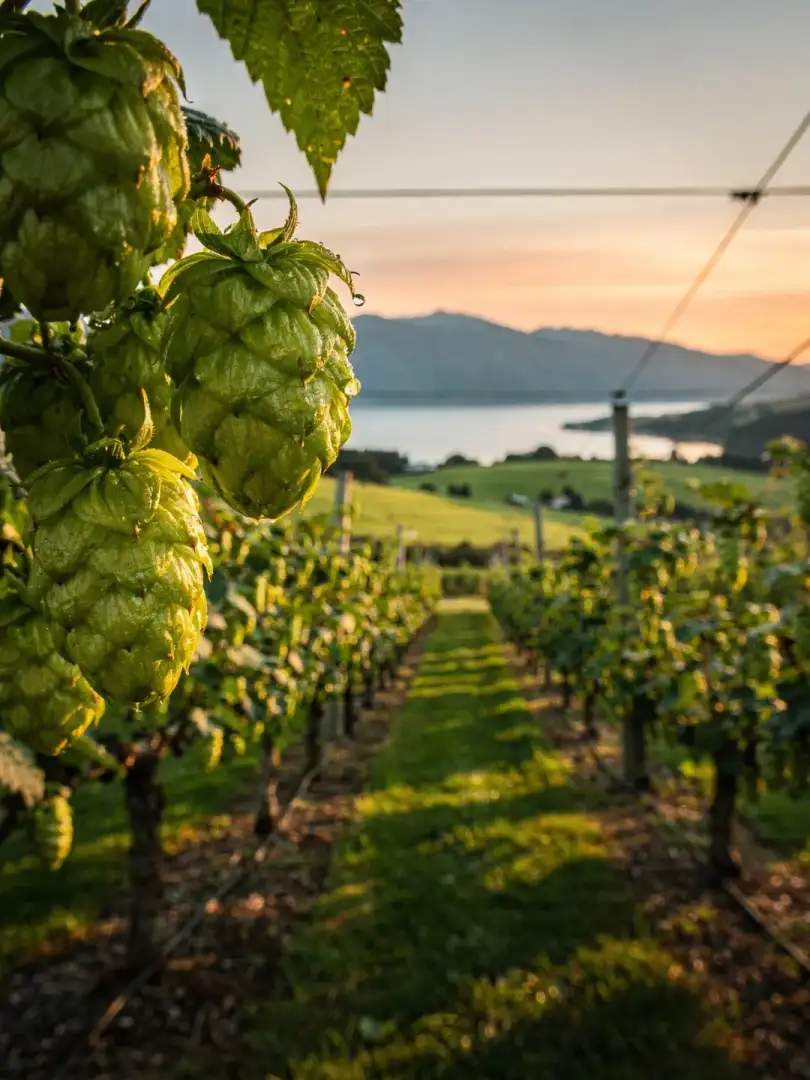
Cones from Nelson
Hops
The hops for Wellington's beers don't grow in the city but around Nelson on the north of the South Island, across Cook Strait. They determine how a Pale Ale or IPA from New Zealand smells.
Three varieties stand out repeatedly. Nelson Sauvin smells of white wine, gooseberry, and grapefruit, Motueka leans toward lime and citrus, and Rakau brings stone fruit like peach. Garage Project combines Nelson Sauvin and Rakau in its Pernicious Weed, a beer that's stayed on the lineup since the "24 Beers in 24 Weeks" series, with the recipe unchanged ever since.
Hops have two jobs. Boiled early in the wort, the boiled malt-sugar water, they deliver bitterness. Added later, or added cold to the finished beer in a process called dry hopping, they contribute aroma without adding much bitterness.
Wellington brewers often favor this late hopping. That's why their beers smell of fruit and taste less sharply bitter than the IBU count might suggest. IBU stands for International Bitterness Units, a measure of dissolved hop acids.
Freshness matters. Hop aroma fades fast, so many Wellingtonians drink their IPA young, ideally weeks rather than months after packaging. That's one reason taprooms like Garage Project's pour their beer right on site: the path from tank to glass is short, and the fruit character survives.
Hops are picked in late summer and usually dried quickly, then pressed or processed into pellets, small compressed pucks that store well. Wellington brewers often order both forms, depending on whether they're after aroma or bitterness. Nelson hops are considered the country's flagship variety and shape the image of New Zealand beer far beyond the capital.