A Pale Malt Base
Malt & Grain
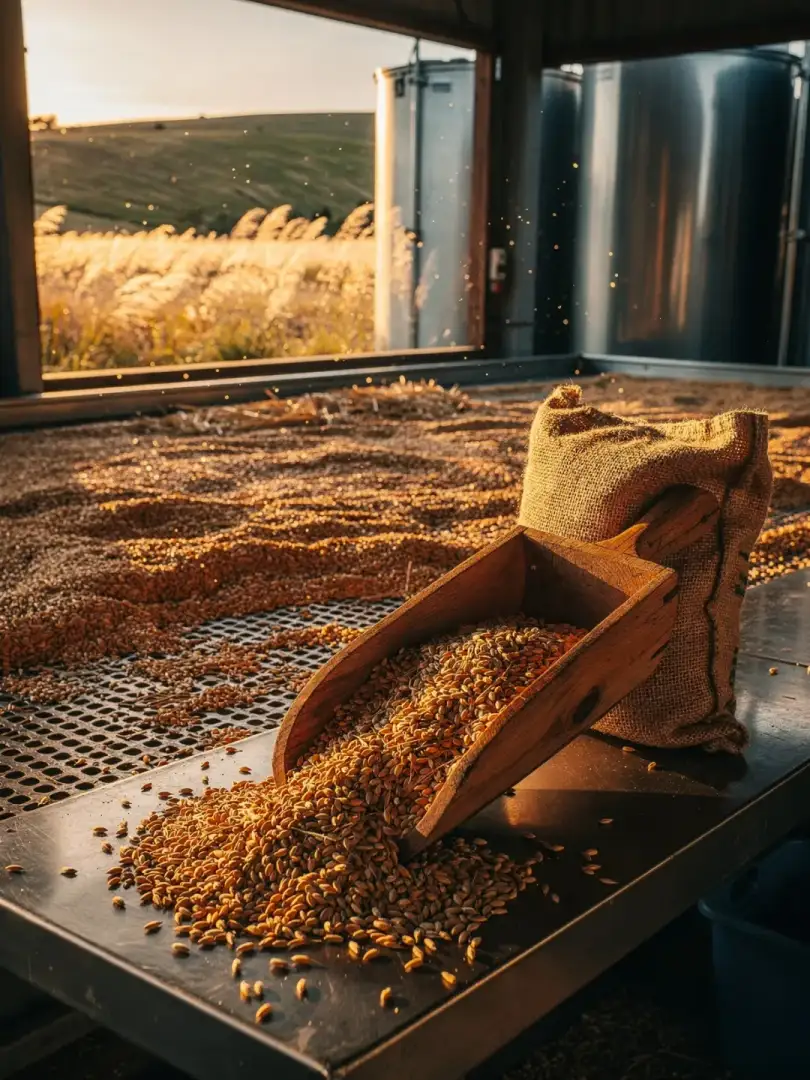
A Pale Ale or IPA from Wellington starts with pale barley malt. Barley is germinated, then dried in the kiln, a heated drying chamber. The hotter and longer the kilning, the darker and sweeter the malt.
Pale base malt makes up most of the grain bill in the city's hop-forward beers. It supplies sugar for the yeast and stays modest in flavor so the hops can take the lead. A touch of caramel malt adds amber color and a quiet sweetness that balances strong bitterness.
Hazy IPAs often add oats and wheat. These bring protein and gums into the beer, keeping it cloudy and giving it a soft, almost silky mouthfeel. This is a technique of the style, not a Wellington secret, but it suits a city that likes to experiment.
Dark beers like porter and stout get their color and coffee notes from heavily roasted barley and malt. Because their flavor is so intense, small amounts go a long way.
New Zealand has no purity law. Brewers can use oats, wheat, or sugar alongside barley whenever the style calls for it.
Yeast consumes the malt sugar and converts it into alcohol. The more it consumes, the drier the beer tastes; the less it consumes, the sweeter it stays. Anyone ordering a hop-forward beer on Cuba Street or in the Aro Valley in Wellington is usually drinking a dry beer built on pale malt, where the hops set the tone.