Warm and Patient
Yeast & Fermentation
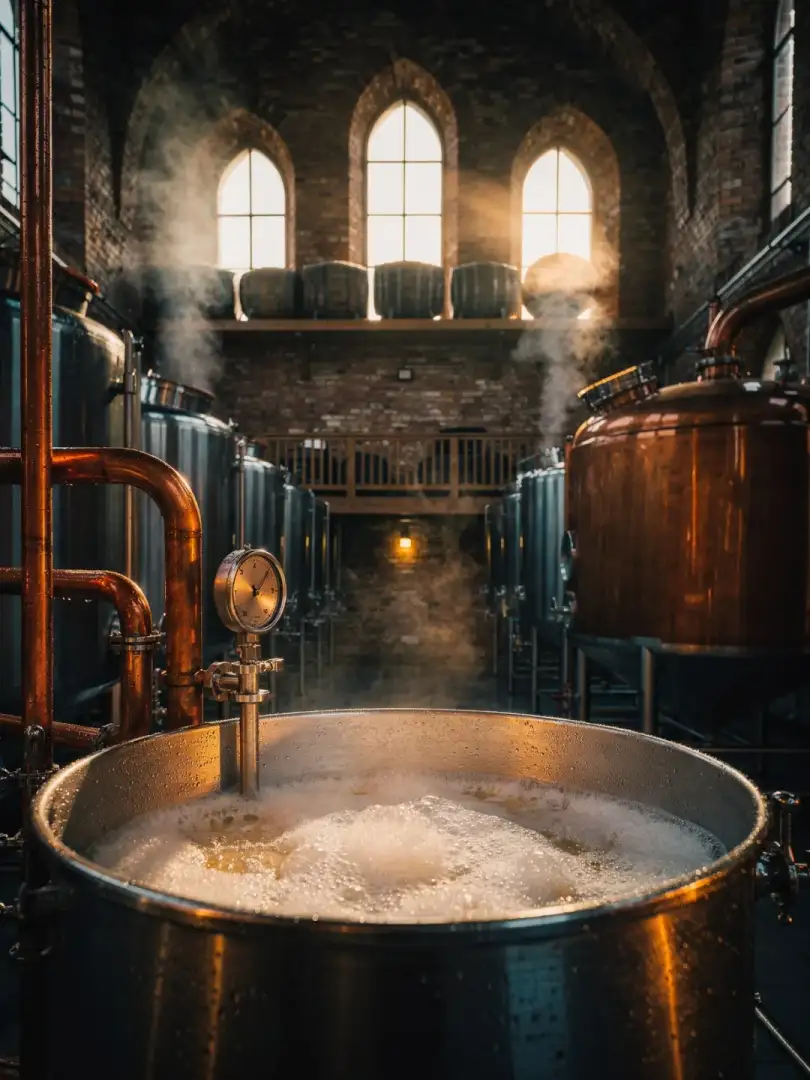
A La Trappe Tripel undergoes top fermentation: the yeast works warm and collects at the surface. For the Quadrupel, according to the recipe description, the brewery uses a Belgian yeast strain, and it shapes the beer more than any other ingredient on the list.
Warm-fermented yeast produces esters, fruity aromatic compounds, and sometimes phenols reminiscent of clove or pepper. That's why Dubbel and Quadrupel carry notes of banana, raisin, plum, or baking spice, even though none of these ingredients are actually in the brew. The beer generates these aromas itself.
Strong beers need time. The higher the original gravity—the sugar content of the wort before fermentation—the more alcohol results, and the longer the yeast needs. Bottled too soon, such beers taste sharp and solvent-like; given some aging, they turn round and smooth. That's why a strong Trappist beer often tastes gentler after months in the bottle than it does fresh.
Bavaria, by contrast, brews with bottom-fermenting yeast. The switch came to the Swinkels family in 1925, when the brothers moved over to pilsner. Bottom-fermenting yeast works cool, settles at the bottom of the tank, and leaves behind a clear, clean beer. According to regional brewing history, the first bottom-fermenting brewery in Brabant was Brauerei Beijersch in Bergen op Zoom, which began brewing in 1874.
Warmth versus cold, fruit versus clarity: both fermentation methods exist in North Brabant within just a few kilometers of each other. To compare them, you don't need a plane ticket, just two glasses. A Bavaria Pilsener tastes of malt and bitterness, a La Trappe of fruit and spice, and both come from the same region.