Backbone, Not Punch
Hops
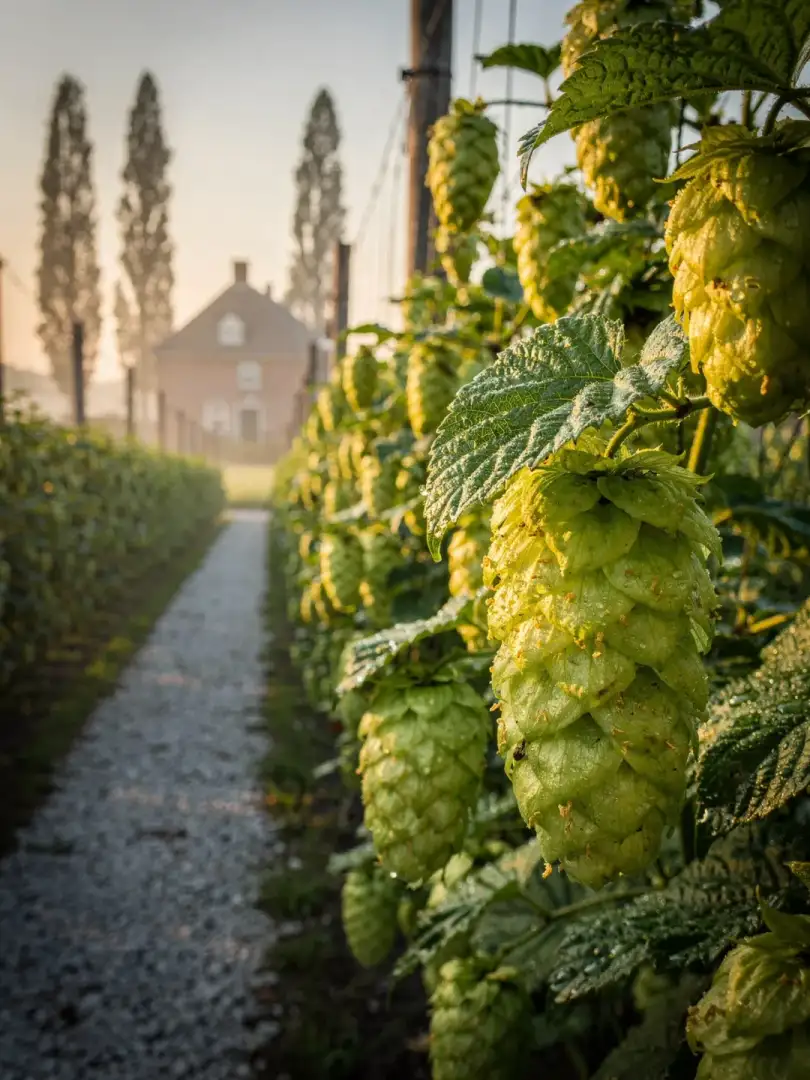
Hops don't grow in North Brabant on a scale comparable to the Hallertau or Poperinge. Brewers in the region buy them in. For La Trappe, sustainably farming operations from the Netherlands and Germany have supplied the hops since 2008, according to the brewery.
Hops serve two purposes. As bittering hops, they go into the boiling wort early and balance out the malt's sweetness. As aroma hops, they're added late and bring floral, herbal, or citrus notes. How bitter a beer ends up is measured in IBU, a figure indicating the bitter compounds in the beer.
For Dubbel, Tripel, and Quadrupel, these values fall between 15 and 40 IBU according to style guidelines. That may sound modest, but here the hops carry less flavor than structure. They keep the heavy malt aromas and the alcohol in balance so the beer doesn't taste cloying despite its sweetness.
More important than hop aroma in these beers are the aromas from the yeast. Hops here don't need to stand out; they just need to keep the finish clean so it doesn't linger sweet. Anyone drinking a Quadrupel is therefore chasing raisin and spice, not citrus and resin.
The role of hops is entirely different in a pilsner like the one Bavaria brews in Lieshout. There, bitterness defines the character, since it stands out clearly in a lean beer with little malt sweetness and makes drinking refreshing. Both beers come from the same region, yet the hops speak an entirely different language in each.