Sand and Wells
Water & Soil
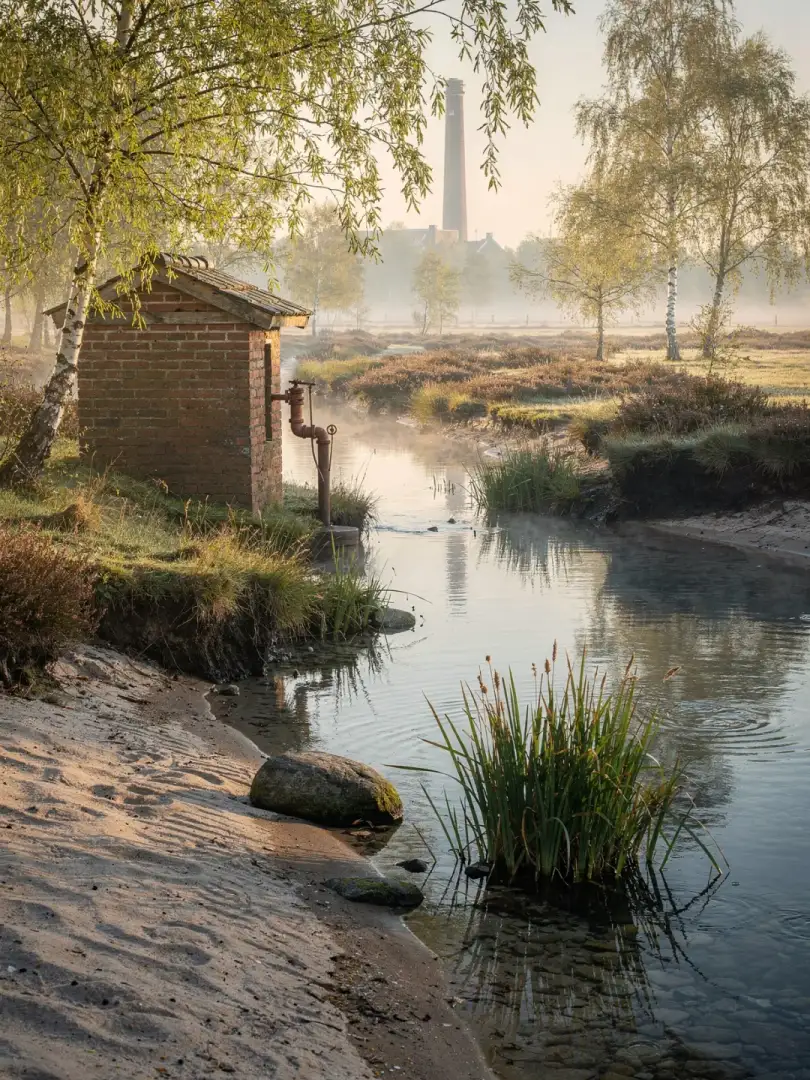
The brewing water for La Trappe comes from wells on the monastery grounds in Berkel-Enschot. The abbey pumps it up from deep layers where years of rainwater have been filtered through sand. A brewery's own well gives it a water it knows intimately and can track from year to year.
Why this matters for the beer is easy to explain. Lime and other dissolved minerals influence how the wort, the sugary liquid before fermentation, tastes. Soft water lets malt and yeast shine through, while very hard water emphasizes bitterness. The brewery doesn't publish specific hardness values here, so none appear in this text.
The soil of North Brabant is largely sandy. Rain seeps deep down, and groundwater collects in the sand layers from which wells draw it up. There's no bedrock here, and so the region lacks what defines brewing landscapes in Franconia or along the Senne: beer cellars cut into rock.
Storage in North Brabant therefore happens in tanks and cooled rooms, not underground in a mountain. The land is flat, the climate mild and damp, and anyone wanting cool storage needs refrigeration technology rather than sandstone. This suits beers that are allowed to mature warm after fermentation.
Rivers, too, have lent their names to breweries. Dommelsch is named after the little river Dommel, on which the village of Dommelen lies. Until 1930 the Snieders family traded under the name De Oranjeboom, until a legal dispute with a Rotterdam brewery of the same name forced a rename. And on the grounds of Koningshoeven, a dedicated biological treatment plant cleans the brewery's wastewater.