Cool and Warm
Yeast & Fermentation
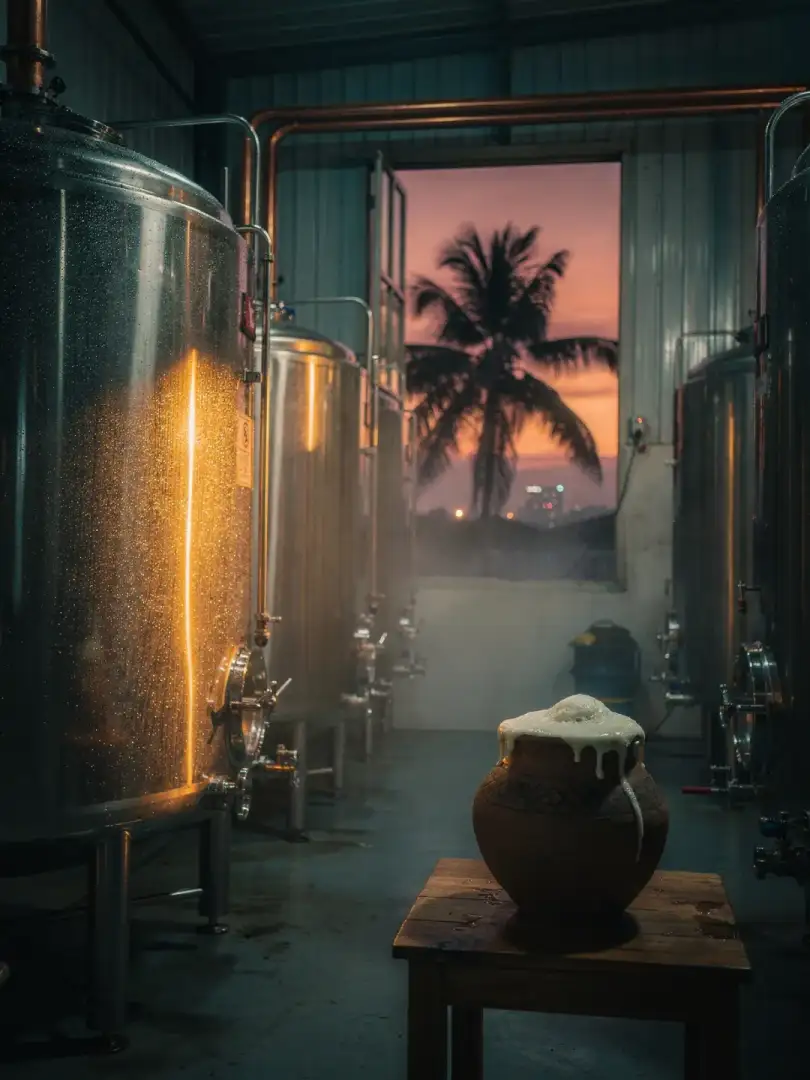
How does a lager ferment in tropical Lagos? Bottom-fermenting yeast works at cool temperatures and therefore needs refrigeration, which costs a lot of energy in the heat. For a beer like Star Lager, fermentation and conditioning happen in tanks at controlled temperatures — never at ambient heat.
A Foreign Extra Stout, by contrast, is top-fermented, according to the BJCP classification. Top-fermenting yeasts handle warmer temperatures well, which suits a country where warmth is the norm.
Household beers follow a different logic. With Burukutu, souring and alcoholic fermentation happen in sequence, as studies on the drink describe it. So it's not a straightforward yeast-fermented beer, but a mixed fermentation: lactic acid bacteria and yeast both do the work.
Pito and Burukutu aren't bottled or aged. They're sold fresh, usually right in the household where they were made. Pito is drunk warm or cold, and the warmth comes from the fermentation process itself.
These are two different worlds of fermentation: the tanks and cooling systems of the big companies on one side, and the household vessels where microorganisms transform the drink within a single day on the other.
That also explains why household beer spoils so quickly. The longer it ferments, the more sour it becomes and the less sweetness remains. Drink Pito on day one and you're tasting a different beverage than on day three, and the brewers time their sales around this short window. A bottle sealed with a crown cap, as the big companies fill them, lasts months by comparison.