Sorghum Instead of Barley
Malt & Grain
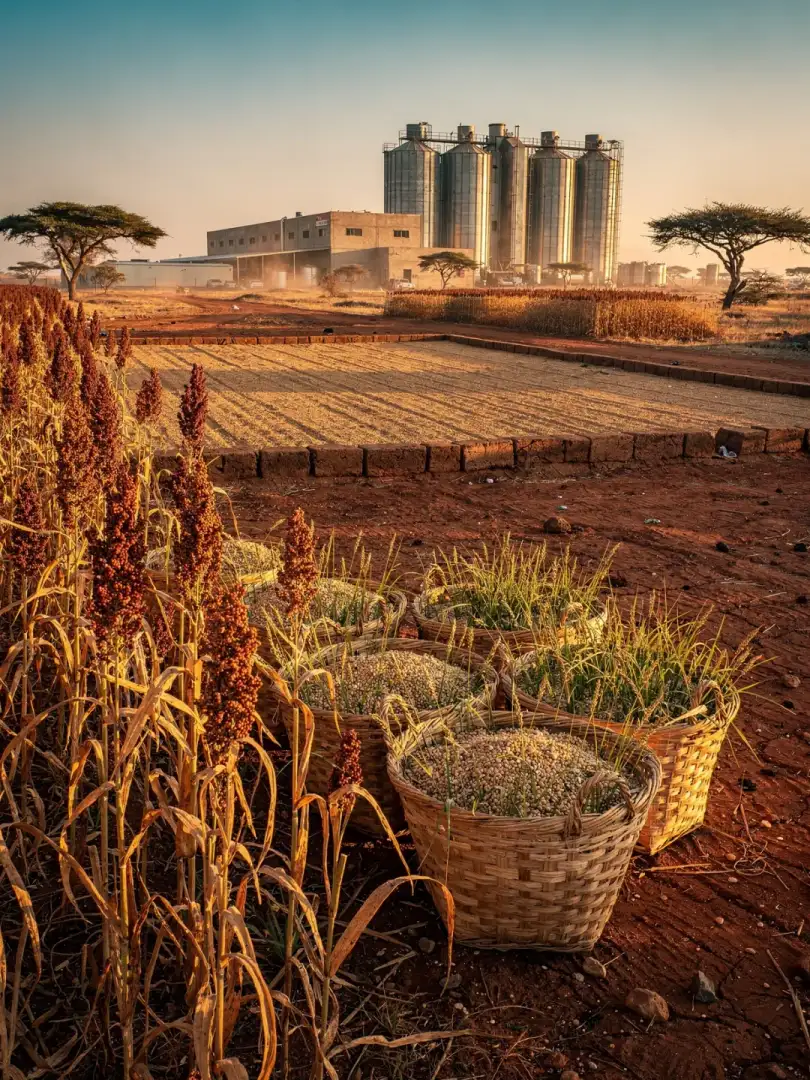
What gets malted in Nigeria instead of barley? Sorghum, a type of millet that grows in the country's north. Barley needs a cooler climate, so barley malt has to be imported into Nigeria.
With foreign currency tight and imports costly, brewers have leaned more on local ingredients for years. Nigerian Breweries lists sorghum and cassava as homegrown raw materials and says it runs two malting plants, in Aba and Kaduna, where Nigerian sorghum is malted.
Breeding plays a role too. The Institute for Agricultural Research in Zaria has released sorghum varieties with good malting properties, including CSR03H and CSR04H. Malting means moistening and sprouting the grain so it develops enzymes that later convert starch into sugar.
The Reinheitsgebot doesn't apply here. Unmalted grain, sorghum, and cassava can all go into the mash alongside malt, giving many beers from the region their own distinct character.
Sorghum is also the backbone of home brewing. For Burukutu, the grain is malted, mashed, soured, and fermented, as studies describe it. Pito is made from sorghum or millet, following a similar path from milling to boiling.
Sorghum, incidentally, is an ancient African grain and copes with drought and heat better than many others. For people in the north, it's long served as both food and brewing base. That corporations now process it in malting plants ties back to this tradition, even if the technology has changed.