Lagoon & Heat
Water & Soil
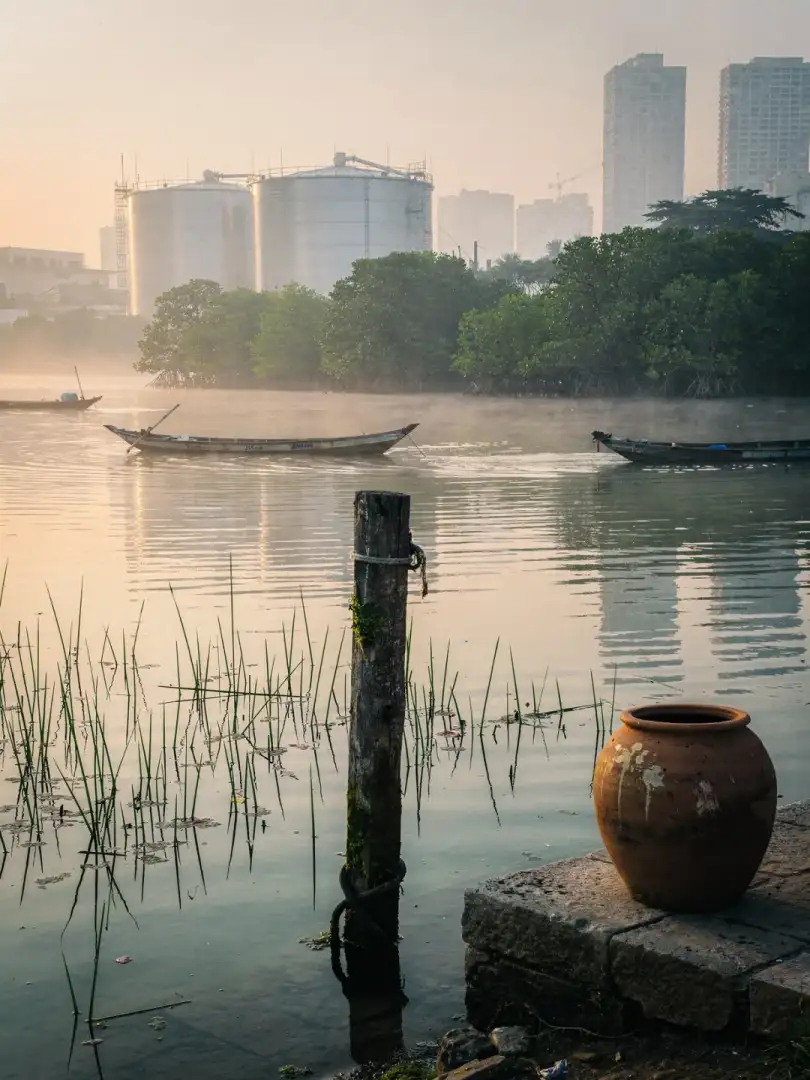
How does the Lagos climate shape brewing? The city, one of Africa's largest, sits flat on the Atlantic between lagoon and sea. It's hot and humid year-round, and that shapes daily life in the brewery.
There are no rock cellars here like those that once kept lager beer cool in Franconia or Bohemia. Fermentation and lagering happen in refrigerated tanks, and the cold has to be made artificially. A lager in a tropical country is therefore, above all, a matter of refrigeration technology.
Brewing water itself plays only a small role in shaping style today. Large breweries treat their water almost everywhere: filtering it, sterilizing it, and adjusting mineral content as needed. What matters is that it's clean and consistent batch to batch.
It's different with traditional millet beers. For Pito and Burukutu, ground grain is mixed with water, left to settle, and then boiled. Here the water comes straight from the household, and how well and how long the drink keeps depends heavily on cleanliness during production.
Since water and terroir haven't shaped a style here, the real distinction lies elsewhere: in the grain. More on that in the next stop.
A city this size brings something else too: heavy consumption packed into a small space. Breweries in Lagos must therefore keep water, electricity, and refrigeration reliably flowing, and that's one of their biggest challenges. Drink a beer from Iganmu or Ikeja, and you're tasting the result of this technology as much as of the land.