Bavarian Heritage
Region & History
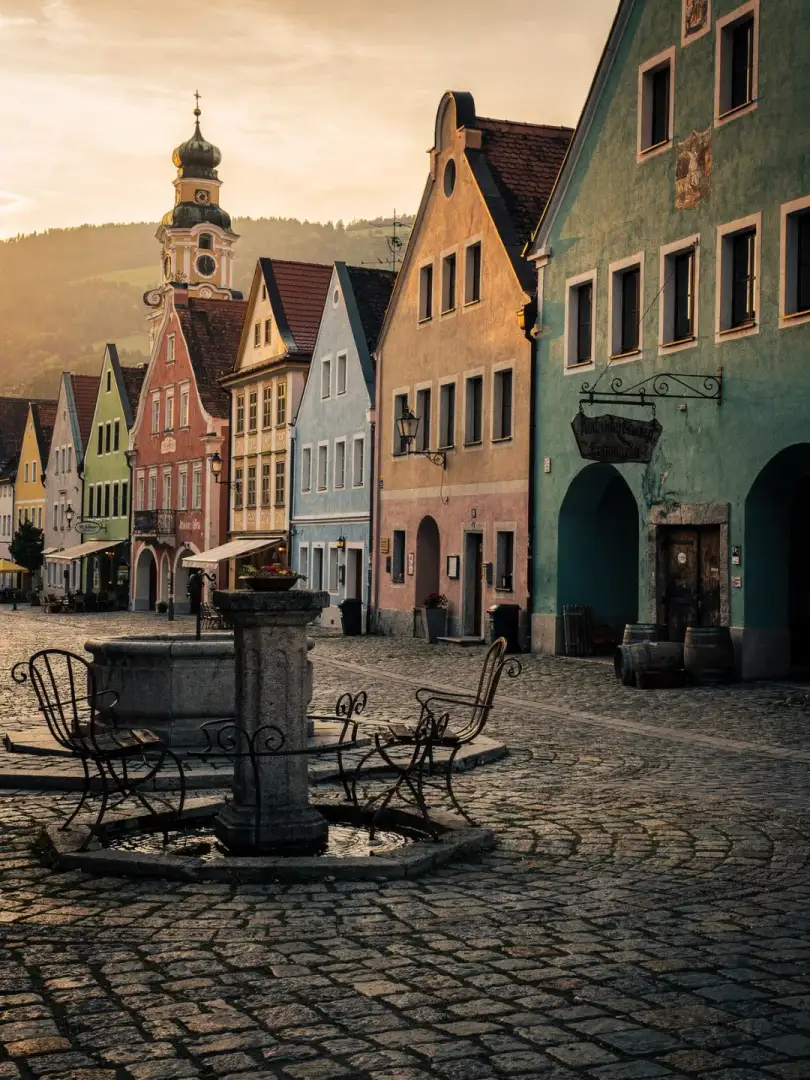
Why are there so many breweries in the Innviertel? The reason lies in a border that no longer exists. Until 1779, the land between the Inn, Salzach and Hausruck belonged to Bavaria, and it was only the Peace of Teschen that assigned it to Austria. The Reinheitsgebot (Purity Law) of 1516 therefore initially applied here just as it did in Munich.
Brewing had already become a primary trade for many in the Innviertel by the mid-15th century. Around 1600, Braunau am Inn alone counted some 23 breweries, while Ried im Innkreis had 13 in the 17th century. In a town you could walk across in a quarter of an hour, there were more brewing kettles than many a whole county has today.
Brauerei Ried in Ried im Innkreis traces its roots to 1536, when a Bräustadl (brewhouse) belonging to Georg Preu appears in a boundary description. A Wernhart Prew is even documented as early as 1432. The brewery took its present form in 1908, when innkeepers frustrated with the inconsistent quality of the beer they were supplied formed a cooperative and bought the brewery outright.
In Schärding, the Baumgartner family is first mentioned within the town walls in 1609. The brewery remained in family hands for over 400 years and is now owned by a charitable foundation. Between 1950 and 1954 it was relocated to just outside the town, where it still stands today.
There is no EU geographical protection for Innviertel beer; the designation “Bayerisches Bier” (PGI since 2001) applies only to Bavaria. The region has organized itself instead: the Bierregion Innviertel brings together, by its own count, ten breweries, 28 taverns, and more than 80 beer styles.