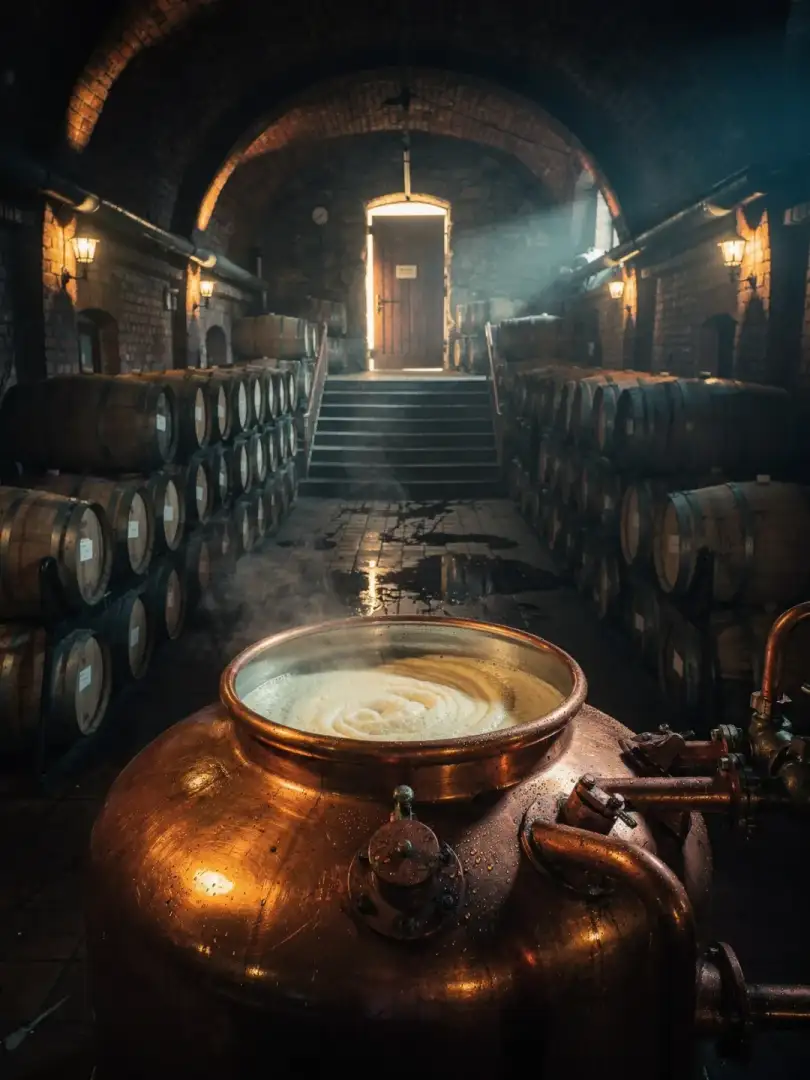
Top- and Bottom-Fermented
Yeast & Fermentation
In the Innviertel, two fermentation styles sit side by side. The Märzen and the Zwickl are bottom-fermented, brewed with lager yeast at cool temperatures. The Rieder Weisse is top-fermented and ferments warmer, which is why it carries those fruity notes of banana and clove familiar from Bavarian wheat beer.
Whether a beer is top- or bottom-fermented has nothing to do with its strength. It describes where the yeast settles after fermentation: at the top for top fermentation, at the bottom of the tank for bottom fermentation. Bottom-fermented beers then age longer in the lagering tank, or, in earlier times, in the cellar, so the flavors can round out.
The Zwickl, which Brauerei Baumgartner in Schärding keeps as a classic cask beer, is an unfiltered beer. After aging, it's not passed through a filter, so it stays slightly cloudy and retains more yeast and flavor. With the bottled Weisse, the yeast is even meant to end up in the glass.
The question of alcohol-free beer also comes down to yeast. In the industry, alcohol-free means no more than 0.5% ABV, though there's no legal definition for beer as such. Since 2011, Ried has been brewing an alcohol-free Hefeweizen; according to the region, it was Austria's first alcohol-free wheat beer. The label doesn't always reveal how the alcohol is removed. In a region that has been brewing since 1536, this is a fine example of how tradition and new technology coexist.