Bitterness and Aroma
Hops
How bitter is a Märzen, and how bitter is a Weissbier? This is measured in IBU, the International Bitterness Units scale. According to the BJCP style guidelines, a Märzen falls between 18 and 24 IBU, while a pale Weissbier sits at just 8 to 15. The Weissbier stays soft, while the Märzen finishes with a slightly bitter edge.
Hops play two roles. Added early to the wort kettle, they release bitter compounds that balance out the malt sweetness. Added late, or only after boiling, they bring aroma instead: blossom, hay, herbs, depending on the variety. For the region's bottom-fermented beers, this late addition stays small, since Märzen and Zwickl are meant to live off the malt rather than the scent of hops.
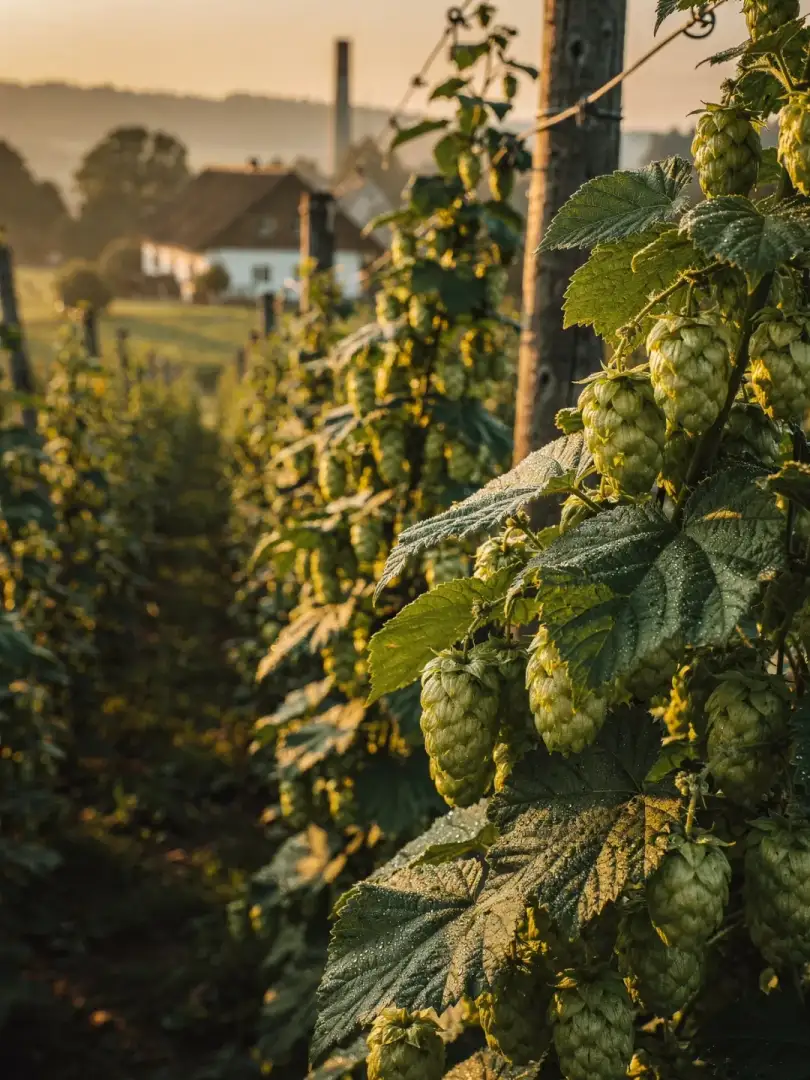
Hops grow on tall trellis systems and are harvested in late summer. Which variety a brewery chooses, and how much goes into the brew, is a decision each operation makes for itself, whether in Ried, in Schärding, or at Raschhofer in Altheim. The recipe shapes the bitterness as much as the finishing flavor, and it's one of those things a brewer rarely gives away. Anyone curious about hop varieties is best off asking directly during a brewery tour, since brewmasters there are usually happy to talk shop.
That a brewery favors a particular hop profile rarely shows up on the label. To taste it for yourself, try two beers side by side: a Märzen from Baumgartner and a Rieder Weisse. By the second sip, it becomes clear what the hops are doing in the background, namely staying out of the spotlight while still carrying the beer.