Barley from the Farm
Malt & Grain
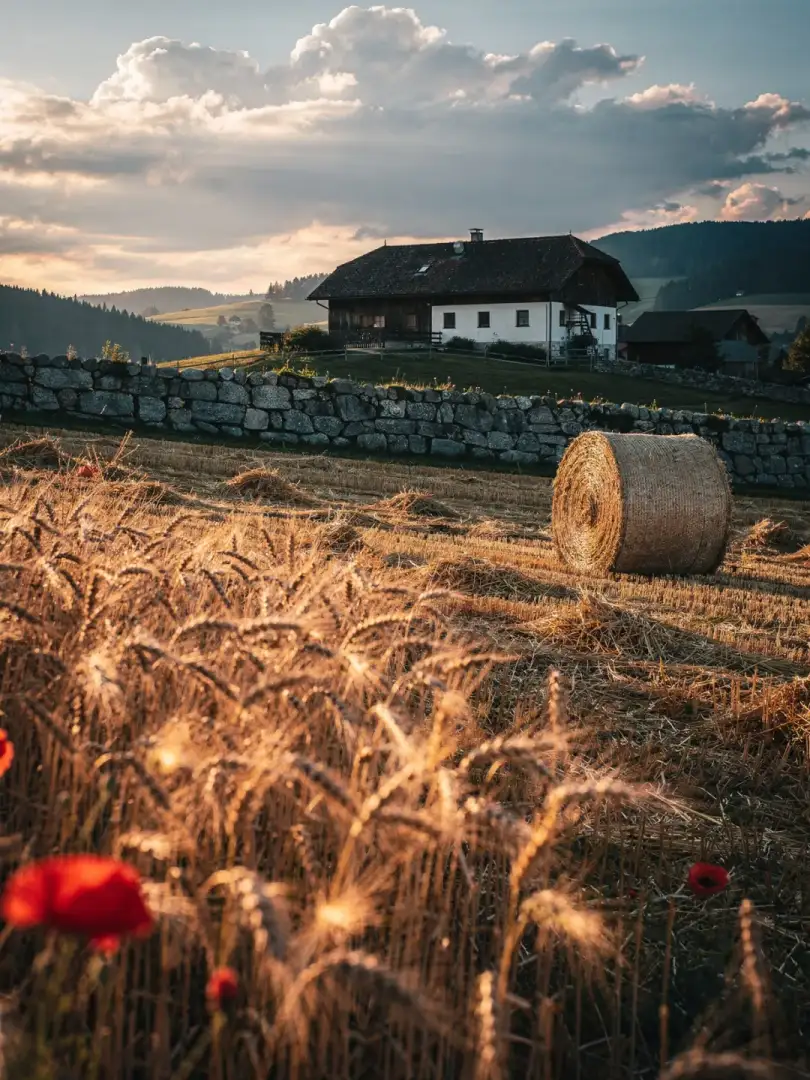
On the plateaus around Freistadt and Rohrbach grows grain well suited to brewing: malting barley, along with rye, oats, and wheat. Summers here are short and the altitude is clearly felt, yet barley copes with these conditions well.
Barley is first allowed to germinate and then kilned, meaning dried with hot air. This malt provides the sugar for fermentation and the color in the glass. The higher and longer the kilning, the darker and more sweetly roasted the malt becomes.
For pale beers like the Zwickl, brewers use lightly kilned malt that tastes of bread crust and honey. For stronger, darker beers, roasted and caramel malts are added. The exact recipes are usually kept closely guarded secrets by the breweries themselves.
Hofstetten has made provenance part of its philosophy. According to the brewery, roughly half of its beers are brewed to organic standards, using raw materials sourced one hundred percent from the Mühlviertel. The grain, in other words, often travels only a few kilometers.
With the Granitbock, flavor is also built through heat. The hot stones caramelize the wort, the sugary liquid before fermentation, right at its surface. This creates roasted aromas that are otherwise only found in heavily kilned malt.
With classic bottom-fermented beers, like those brewed by the Braucommune in Freistadt and the Stiftsbrauerei Schlägl, it's the blend of malts that matters most. A touch of darker malt gives a Märzen its warmth, while pale malt gives a Zwickl its freshness. Tasting both side by side, you can already pick up the difference just from the aroma.