Open and Cool
Yeast & Fermentation
Salzburg's flagship beers are bottom-fermented. The yeast works at cool temperatures, sinking to the bottom of the vessel at the end of fermentation, and the beer then matures for weeks in a lagering tank or cellar. This is also where the word "lager" comes from.
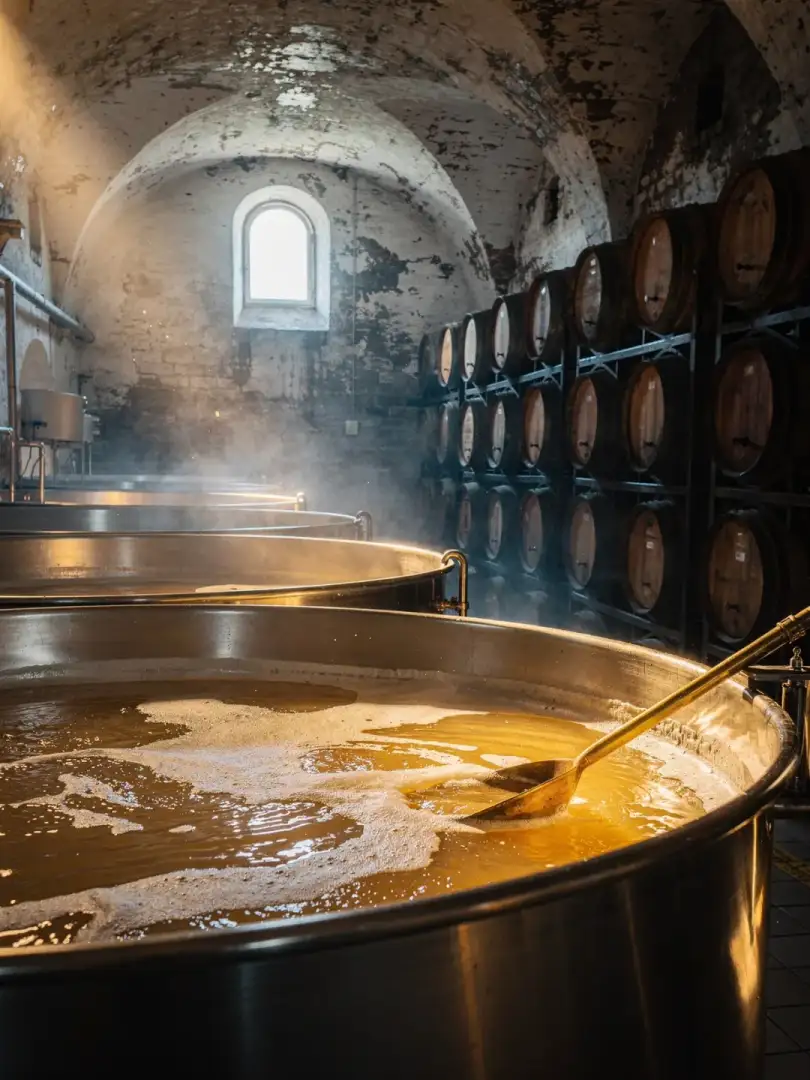
Trumer takes it a step further. The brewery ferments its pilsner in open vats, with an unusually long maturation period, according to its own description. Tannins and bitter compounds that collect on the surface are skimmed off by hand, the brewery says. The house calls this principle "Slow Brewing."
Open fermentation means the vat has no lid, so the carbon dioxide can escape freely and the yeast shows itself on the surface. This was once common practice; today it's become rare, as it demands very strict hygiene.
At the Augustiner Bräustübl in Mülln, it's wood that shapes the maturation. The beer there comes from wooden casks and is served in stone mugs. Wood, when pitched (sealed) on the inside, imparts almost no flavor, but it breathes gently and holds temperature well over time.
Kaltenhausen, finally, shows what happens when the mountain itself helps with cooling: cold air from the wind holes lowers the cellar temperature even without machinery. Fermentation then proceeds more slowly, and the beer develops fewer fruity esters. Esters are aromatic compounds that yeast produces in warmth, and in a clear pilsner they're not meant to stand out. Cool fermentation and long maturation keep the beer clean and composed as a result.