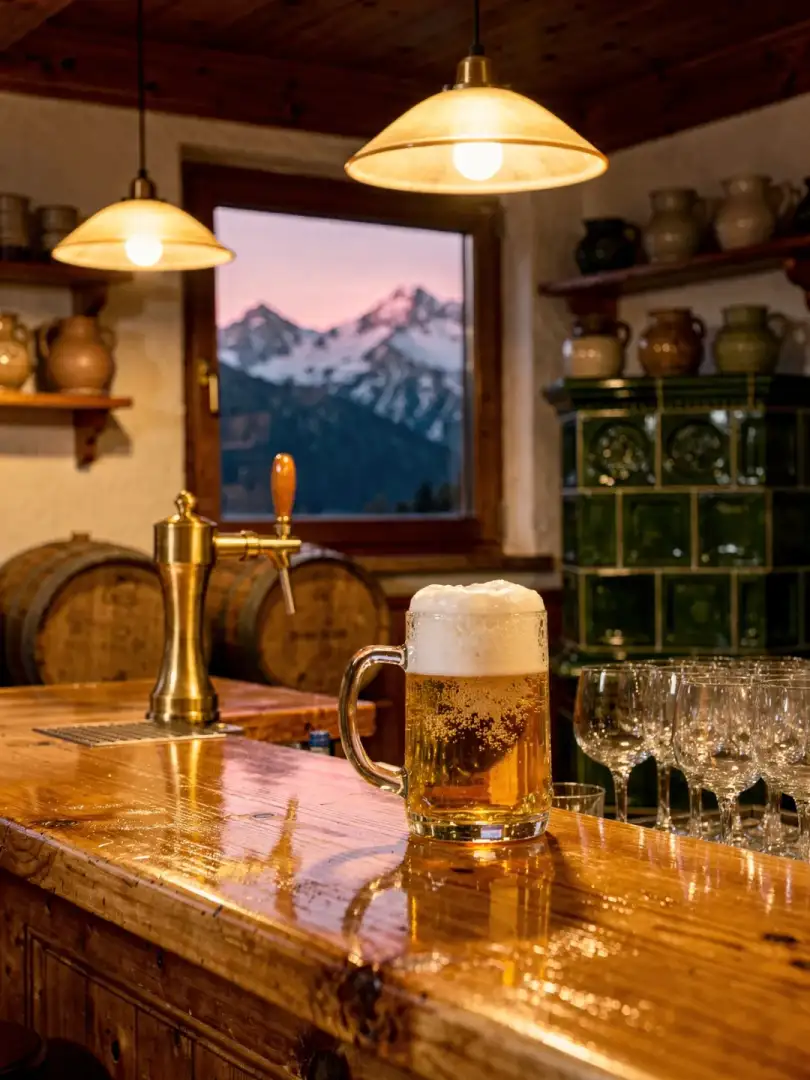
Krügerl and Tap
Tasting
What does a Styrian beer taste like? Mostly soft, slightly bready, with moderate bitterness, like Gösser Märzen. Moving from there to Carinthia, you'll find a hoppier Pils at Hirt, along with the dark Morchl with its roasted notes.
Four examples are good for comparison: Gösser Märzen, Puntigamer, Murauer, and Hirter Privat Pils. The first two belong to Brau Union, Murauer is a cooperative brewery, and Hirter is a family business. Tasting them side by side is worthwhile, as it reveals differences in color, foam, and aftertaste. The Märzen tastes roundest, the Pils bitterest, the others fall in between.
A simple glass is all you need for drinking. In Austria you'd typically order a Seidel at 0.3 liters or a Krügerl at 0.5 liters. A handle has the advantage of keeping your hand from warming the beer.
The ideal temperature is six to eight degrees Celsius. Too cold mutes the aroma, too warm makes the beer heavy and sweet. Märzen and Pils can be served a touch warmer than a light beer, so the malt can show itself. Hold a beer too long in your hand, and you'll notice the difference in taste within minutes.
Pouring follows a simple principle: tilt the glass, let the beer run down the side, then straighten it at the end so a firm, white foam forms. The foam protects the beer from oxygen and keeps the aroma intact.