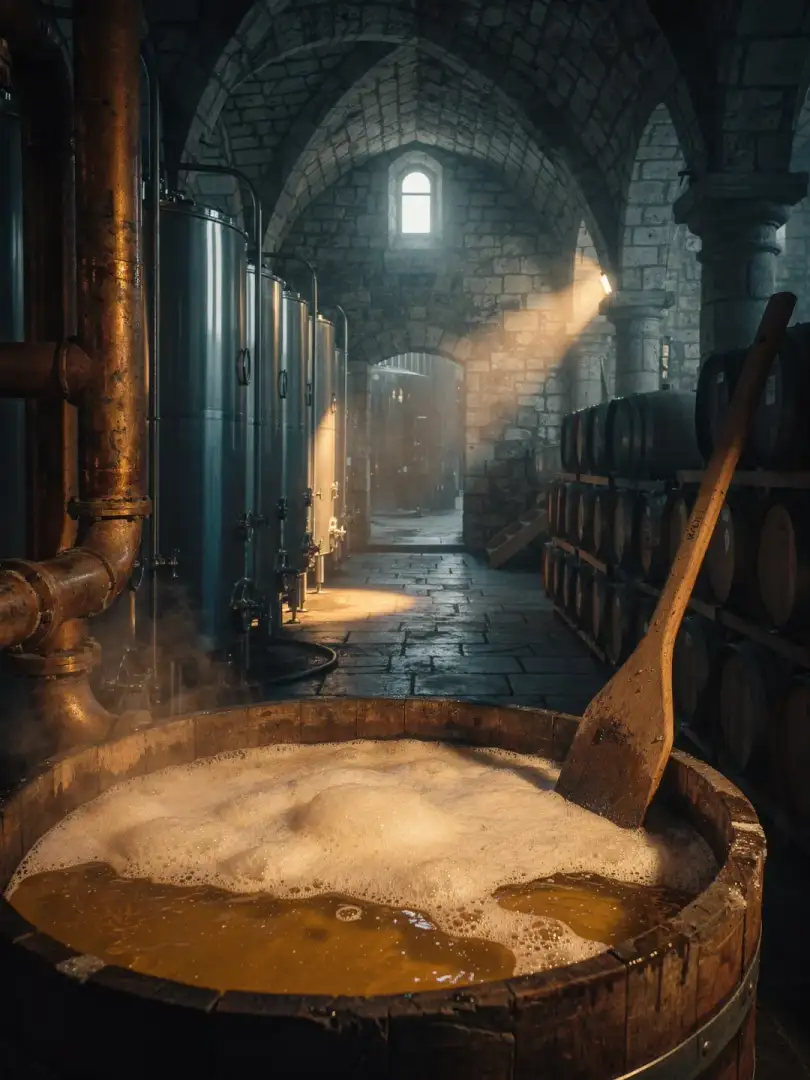
Fermentation Cellar & Castle Cellar
Yeast & Fermentation
What happens in a brewery's fermentation cellar? There, yeast converts the malt sugar in the wort into alcohol and carbon dioxide. The beers of this region are predominantly bottom-fermented lagers: the yeast works at a cool eight to twelve degrees and settles at the bottom of the tank at the end.
We've only known precisely since the 19th century that fermentation can be controlled. In 1883, Emil Christian Hansen isolated the first pure culture of a bottom-fermenting yeast at the Carlsberg laboratory in Copenhagen. Before that, brewers worked with yeast passed down from brew to brew, without knowing it was alive.
At Schloss Starkenberg, the history of the fermentation cellar comes vividly to life. In the brewery's old fermentation cellar now sits the beer spa, which, according to the operator, is said to be the first of its kind. Where beer once fermented, there now stand three pools, each four by four meters. The artist Wernfried Poschusta designed the installation.
After primary fermentation comes lagering. During this stage, the young beer matures for several weeks at temperatures close to zero degrees; the yeast settles, the carbon dioxide binds, and the beer clarifies. That's where the name lager beer comes from. At Schloss Starkenberg, the mountain's chill is part of the story visitors experience on the tour through the cellar rooms.
In modern operations like Fohrenburg and Zillertal Bier, fermentation and lagering take place in closed, cooled stainless steel tanks. Zillertal Bier had two large storage halls built in 1994, and the new brewhouse went into operation in 2012. According to the brewery, around 60,000 hectoliters are produced there each year.