Distant, But Essential
Hops
Does hops for beer grow in Tyrol and Vorarlberg? Not on a large scale. The breweries source their hops from the classic growing regions further north and east. Which varieties exactly they use, Zillertal Bier, Mohren, Fohrenburg, and Starkenberger generally don't disclose.
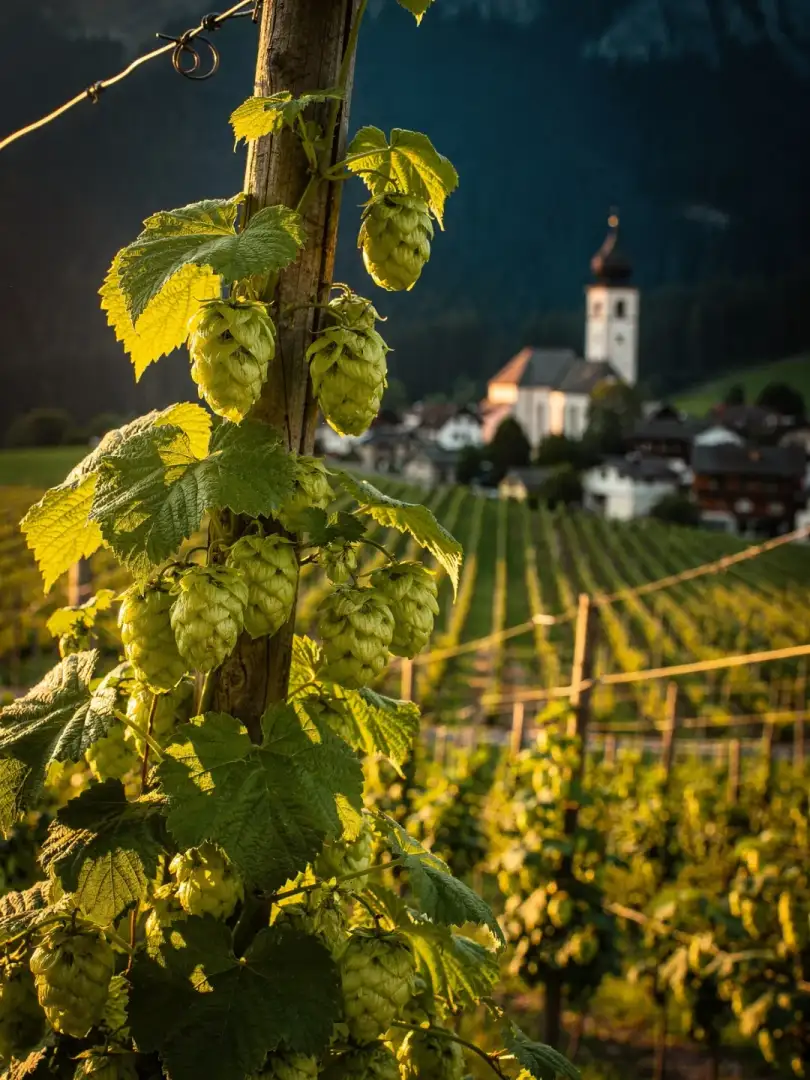
Hops are the cones of a climbing plant that grows on tall trellises. They provide two things. The alpha acids in the resins make beer bitter and help it stay fresh longer, while the essential oils bring aromas of herbs, blossoms, or citrus. Bittering hops are added early in the boil, aroma hops late.
Among the well-known aroma varieties for lagers are Hallertauer Mittelfrüh, Saaz from Žatec in the Czech Republic, and Styrian Golding from Slovenia. Germany has 18,962 hectares under hops, with the Hallertau accounting for the largest share at around 17,129 hectares. Hops from this region supply many breweries in the Alpine region, though there's no requirement to use it.
A Helles from western Austria is lightly hopped, with bitterness falling between 16 and 22 bittering units according to style guidelines. A Märzen sits just above that at 18 to 24. That many people here describe the beer as soft and round has less to do with the hops than with the malt that balances them.
Bitterness units, or IBU for short, measure the bitter compounds in the finished beer. A Pils can come in noticeably sharper at over 40 units. Anyone who tries a Fohrenburger Jubiläum and a Pils side by side will taste the difference mostly in the finish.