Silvretta & Ice Cellar
Water & Soil
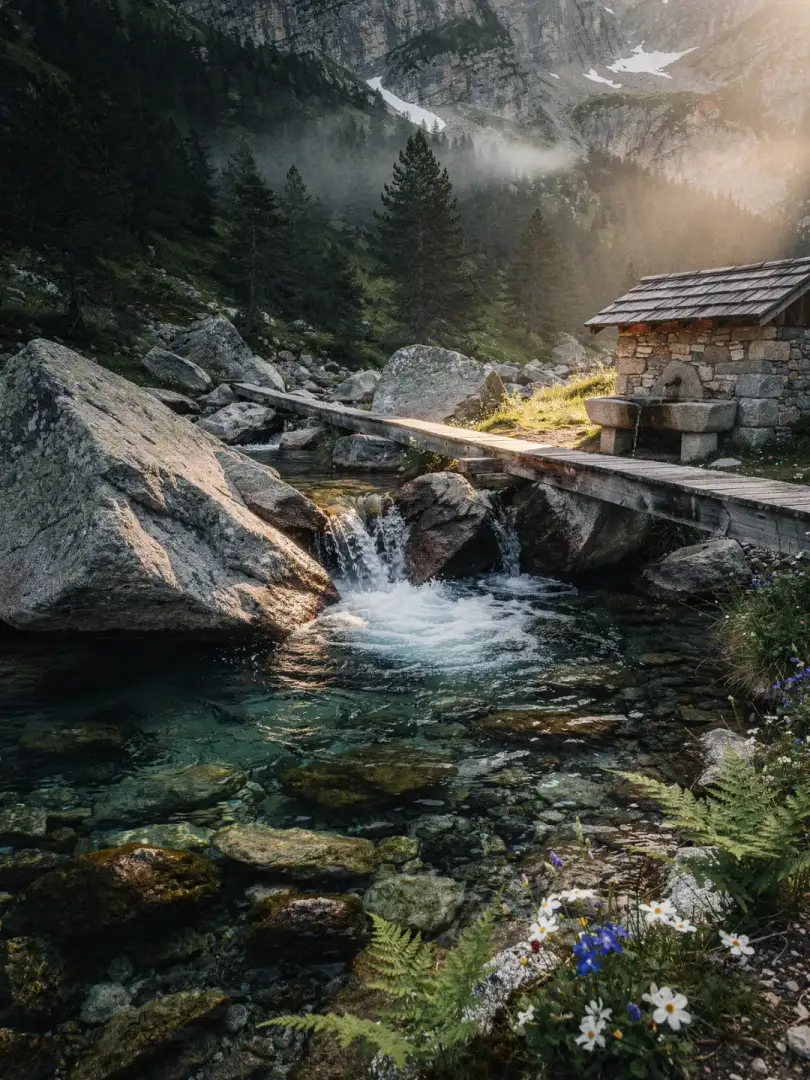
Where does the water for Fohrenburger beer come from? According to the brewery, from the Silvretta-Arlberg massif, the mountain range behind Bludenz made up largely of hard primary rock. Water that seeps through such rock stays comparatively low in minerals and tastes correspondingly soft and clean.
Today, though, brewing water alone no longer determines the style. Almost all breweries treat their water, softening it or adding salts in a targeted way. Even so, provenance remains a selling point, and for good reason: in the mountains, clean spring water isn't anything special—it's the norm.
The Schloss Starkenberg brewery places particular emphasis on its source. According to its own statements, it works with pure water from its own spring. In Bludenz too, water was a business before beer: the Gasthaus Fohrenburg, acquired in 1880, belonged to the Bad Fohrenburg healing spring in Hinterplärsch.
How did people keep beer cool in summer before refrigeration existed? With an ice cellar. In winter they filled it with ice, which kept it cold through the summer. At Schloss Starkenberg, such an ice cellar from the 16th century has been preserved and can be seen on guided tours.
Between Dornbirn in the Rhine Valley, Bludenz on the Arlberg, and Zell in the Zillertal lie narrow valleys and steep slopes. Brewing happened wherever water, coolness, and an inn came together. That explains why many breweries are located in places that would otherwise be barely known outside their beer.