Barley and Rye
Malt & Grain
Barley becomes malt when the grain is briefly germinated and then dried in a kiln, the so-called “Darre.” In the process, starch converts into fermentable sugar, and the hotter the roast, the darker and sweeter the beer tastes.
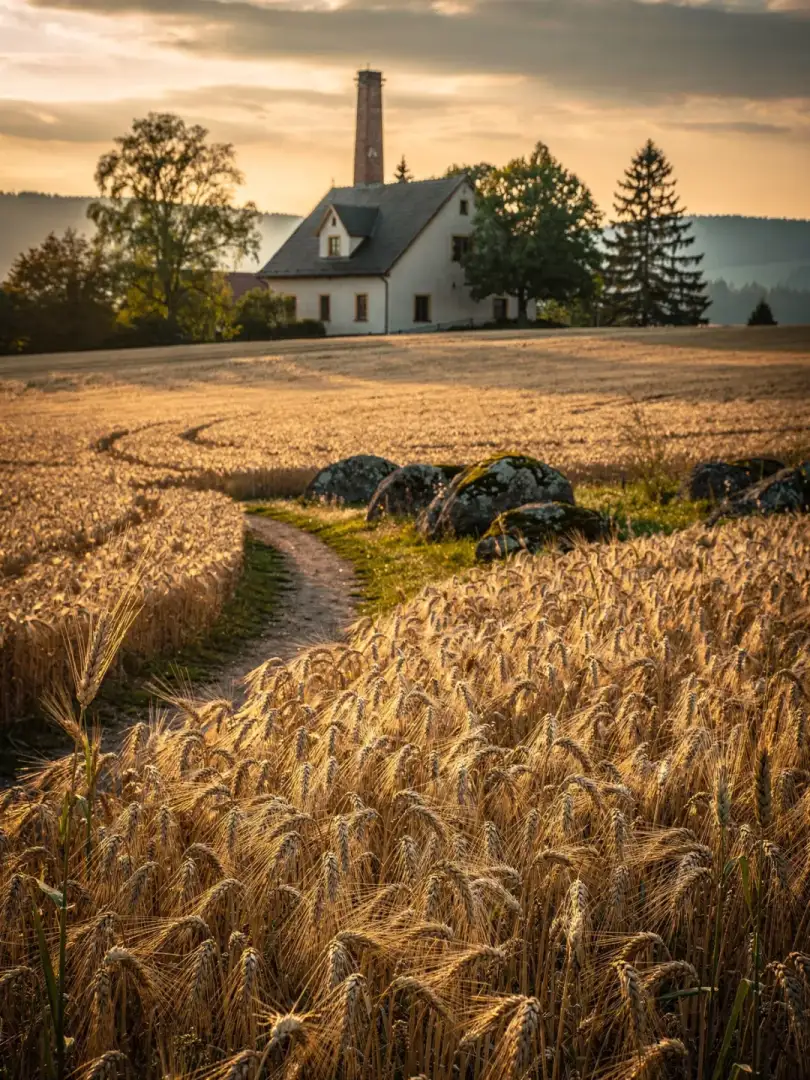
Privatbrauerei Zwettl states it processes 4,000 tons of local malting barley each year. About a hundred farmers in the Waidhofen an der Thaya district supply it. The malt for Zwettler Original comes from Waldviertel barley.
In Schrems, they think locally down to the smallest detail. According to the brewery, its entire need for brewing and organic malt is sourced within a 35-kilometer radius. For the organic beers, that means barley from organic farming.
Rye is a regional specialty. It thrives in poor soil and cool climates, giving beer a spicy, slightly bready character with a dry finish. Schremser Roggen Bio Bier is naturally cloudy, meaning unfiltered, and top-fermented.
Understanding malt doesn't require a lab. Just smell a handful of grains: lightly roasted ones smell like biscuits and grain, darker ones like bread crust. This difference decides whether the beer appears golden or amber in the glass.
The value of good barley shows especially in pale beers. A finely husked grain with low protein content gives a clean, crisp flavor. That's why brewers and farmers choose their varieties together even before sowing.