Granite and Springs
Water & Soil
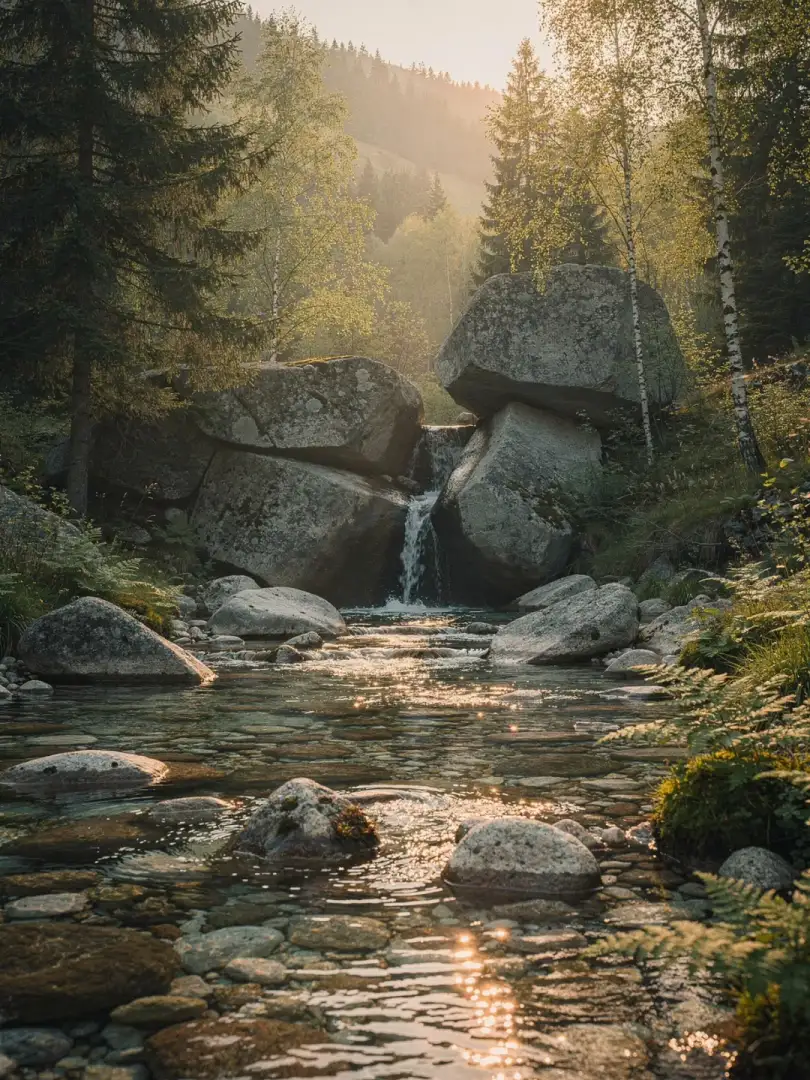
The Waldviertel rests on a massive granite base, the edge of the Bohemian Massif. Granite contains almost no limestone, which means the spring water here is naturally soft. For brewers, that's a gift from the bedrock.
Why is soft water important for beer? Dissolved salts, especially carbonates, determine how hard the beer feels on the palate and how the hops taste. Low-mineral water lets pale beers come across as clean and rather mild, with a finer, less harsh bitterness.
Privatbrauerei Zwettl states it uses water from its own springs. Soft, clear brewing water is named, alongside hops and malting barley, as one of the three pillars of its beers. For Zwettler Original, everything is said to come from the Waldviertel.
The soil also shapes what grows in the fields. The climate is harsh, winters are long, and the soil is sandy and poor. Barley and rye thrive here, while corn or grapevines fare less well.
Water isn't quite as simple today. Many breweries treat their water to adjust it precisely. Still, in Waldviertel operations it remains a starting point that doesn't need softening in the first place.
Add to that the climate. The highlands are rugged, summers are mild, and nights are often cool. Cold holds more easily in the cellar and lagering tank here than on the plains, which benefits the long, calm maturation of bottom-fermented beers.