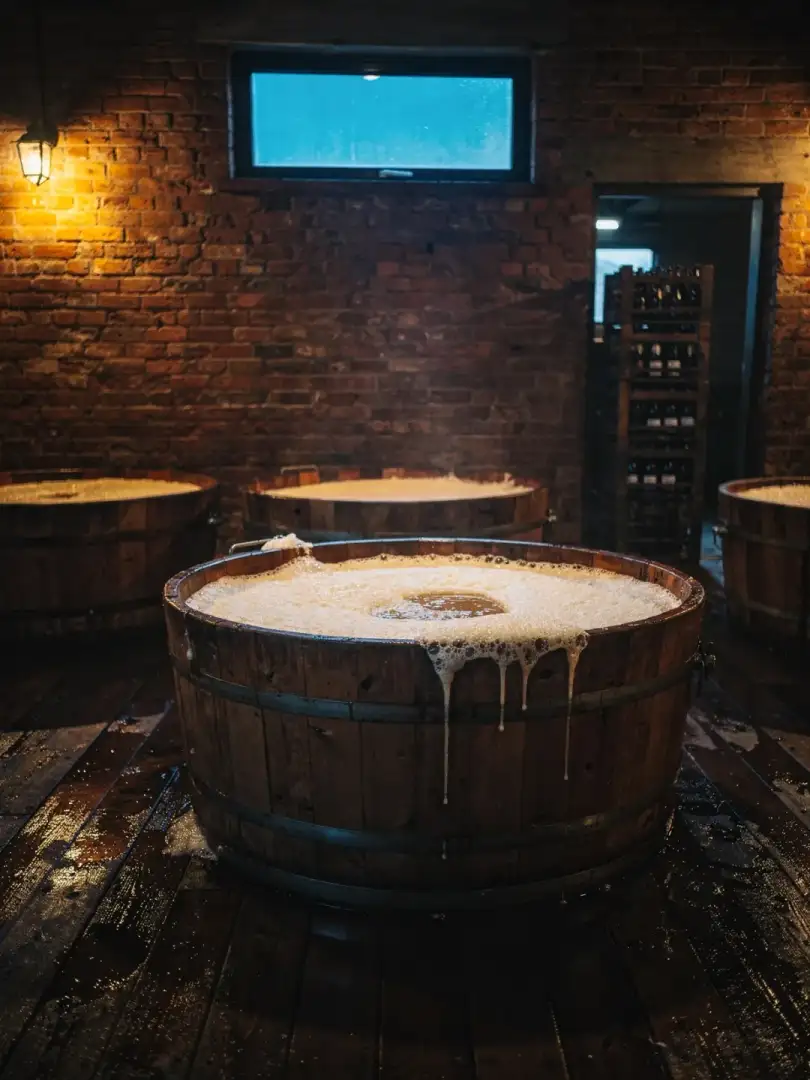
Open Wooden Vats
Yeast & Fermentation
Is Grodziskie top- or bottom-fermented? It's top-fermented, using a yeast that collects at the top of the vessel and works at warmer temperatures. Fittingly, the beer wasn't cold-stored but matured warm, gaining its sparkle only in the bottle.
According to historical accounts, the wort fermented in open wooden vats at 14 to 16 degrees Celsius. Two strains of yeast from the old brewery have been documented. One settled quickly and fermented fast, while the other stayed suspended in a fine haze and was suited for bottle conditioning. According to the sources, only the settling strain survived.
For the 2015 revival, the Grodzisk brewery says it used a yeast descended from the old strains. The beer undergoes secondary fermentation in the bottle. This produces the carbonation that gives Grodziskie its lively sparkle, leaving a yeast sediment at the bottom of the bottle.
According to tradition, after bottling the beer was aged for three to five weeks at 14 to 18 degrees in a dark room. There it matured further, becoming clear and rounded. The Grodzisk brewery and homebrewers in Greater Poland still follow this maturation period today. Patience rewards you with a clearer, rounder beer.
The large brewery in Poznań works quite differently. Lech Premium is a bottom-fermented lager, fermented cool and then cold-conditioned for an extended period. So two yeasts and two brewing methods exist within the same Wielkopolska voivodeship. The difference lies in temperature: Grodziskie ferments warm in open vats, while the lager matures cold in sealed tanks.