Dark Malt
Malt & Grain
What malt is Baltic Porter brewed from? The base is pale to medium-colored barley malt, combined with dark caramel malts and roasted malts that give the beer its color and aroma. Malt is grain that has been allowed to germinate so its starch can be converted into fermentable sugar.
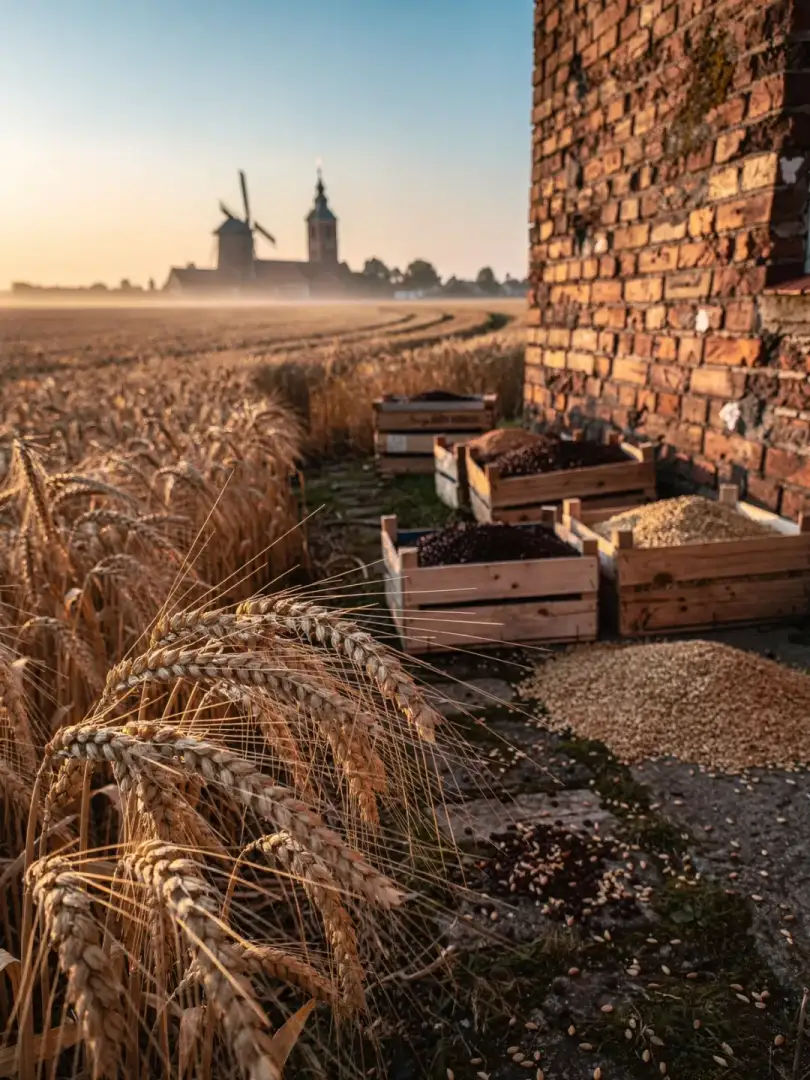
The difference lies in the heat. Pale malt is gently kilned, meaning dried in a kiln. Dark malt is exposed to more heat, caramel malt is heated while still moist, and roasted malt goes into a hot drum until it smells of cocoa, coffee, or toasted bread. The more of these malts in the brew, the darker and more chocolatey the beer becomes.
Barley is a staple grain in Poland, and Gdańsk lived off the grain trade for centuries. Grain from the hinterland arrived in the city via the Vistula and from there went out to every Baltic port. The fact that brewers in Gdańsk had access to barley was one reason the city produced so much beer. Browar Amber in Bielkówko, sitting right in the middle of farmland, brews by the same principle: the grain grows in the neighboring fields, and the roasted malts supply the color and cocoa notes.
A Baltic Porter needs plenty of malt. According to style guidelines, the original gravity—the proportion of dissolved substances in the wort before fermentation—lies between 14.7 and 21.6 degrees Plato. By comparison, a German Pilsner sits at 11 to 12.4. The high malt content provides the sweetness and the full, heavy body that sets this beer apart from an English porter.