Moraine and Delta
Water & Soil
What kind of water does a Baltic Porter need? Even brewers in London, Dublin, and Munich used carbonate-rich water for dark beers, since dissolved lime softens the acidity that dark roasted malts bring to the mash. This makes the beer taste rounder rather than sharp. The same principle applies to Gdańsk, though today it carries little weight in practice.
Nearly every brewery treats its water these days, including Browar Amber in Bielkówko. They soften it, remove salts, or add minerals as needed. The style is now shaped in the brewhouse rather than at the well. That was different in the Middle Ages, when the city relied on whatever water source it could get.
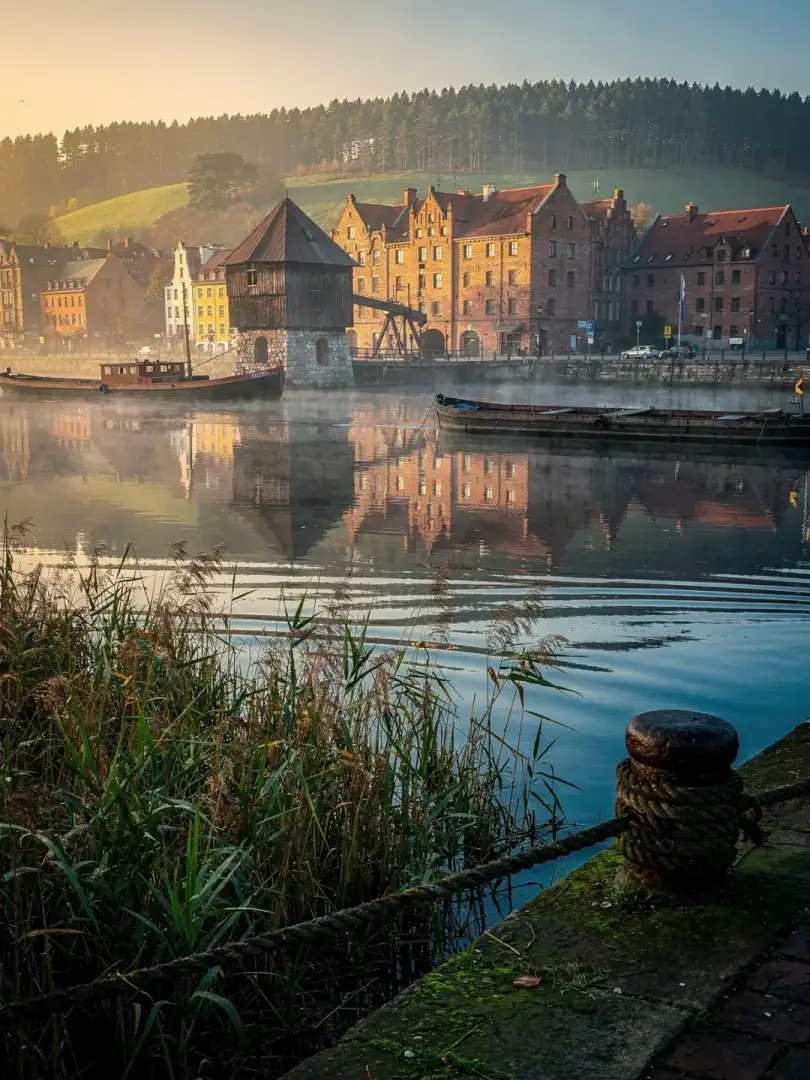
Gdańsk sits on the Motława, a branch of the Vistula that flows through the heart of the old town and separates Granary Island from the mainland. To the east lies the Vistula Delta, the Żuławy, a flat, low-lying marshland with heavy, fertile soil. To the west rise the hills of Kashubia (Kaszuby), a landscape of moraines and lakes left behind by the glaciers of the last ice age.
The climate on the Baltic Sea is cool and damp, with moderately cold winters and mild summers. This favors bottom-fermented beer, since fermentation and maturation both require low temperatures anyway. In the Middle Ages, brewers relied on cool cellars before refrigeration existed. Back then, how the beer tasted depended heavily on the season. In summer, keeping a strong beer cool was difficult; in winter, it was much easier to store.