Bitterness and Aroma
Hops
How bitter is a Polish lager like Tyskie? Only moderately — a pilsner, by contrast, can reach 40 IBU or more. IBU is the measure of bitterness, based on the bittering compounds present in the beer.
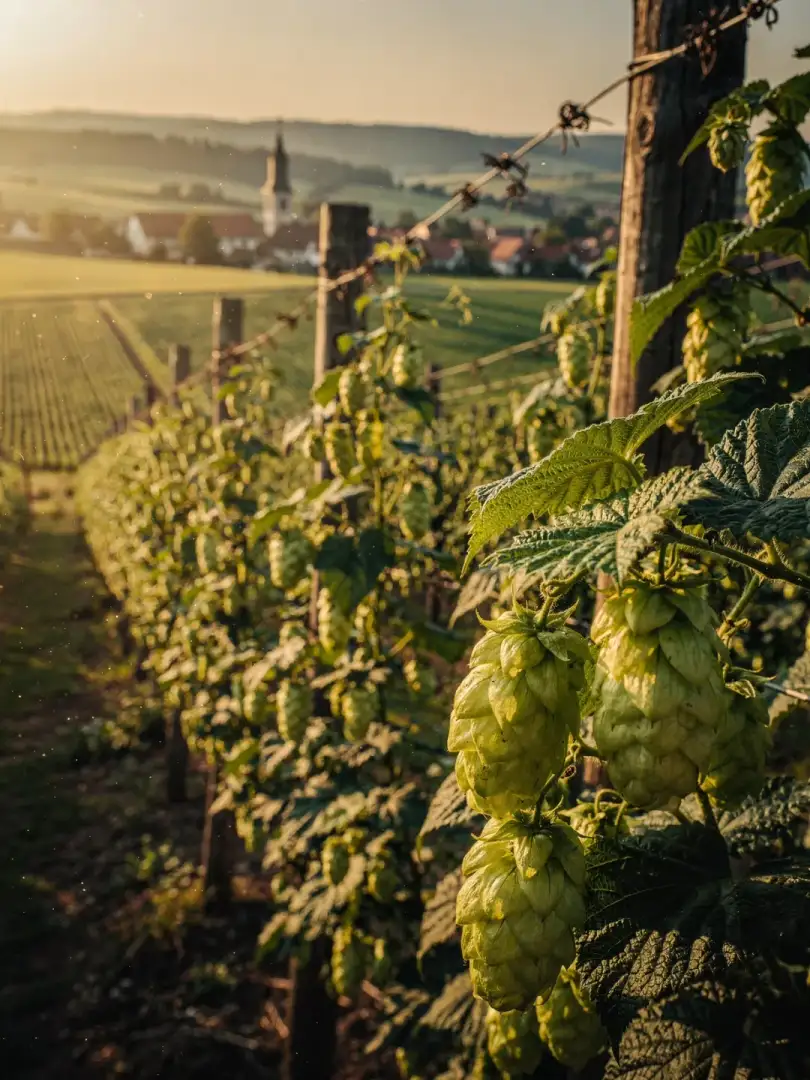
Hops serve two purposes in the brew kettle. Boiled for a long time, they release bittering compounds that balance the malt's sweetness. Added only shortly before the end of the boil, their aromatic oils remain in the beer, lending notes of grass, herbs, or blossoms.
Little hops grow in Upper Silesia itself. Anyone brewing a pale lager in the Bohemian style traditionally turns to hops from Žatec, known in German as Saaz. The Saaz variety hails from there, prized for its spicy, refined aroma. Which exact varieties Tyskie uses is information held by the brewery and isn't established here.
Hops are harvested as cones, dried, and usually pressed into pellets. Large breweries work with such pellets or extracts because they keep well and can be dosed precisely.
The beer's bitterness is tuned to local habit. For Tychy, style matters above all. A beer meant to be drunk in an industrial region after a shift should be balanced, drinkable in quantity, and free of sharp bitterness. Hopping is therefore kept restrained. Anyone seeking a strongly bitter beer is better off with a Franconian pilsner or one of the heavily hopped beers from the craft scene.