Pale Barley Malt
Malt & Grain
A pale lager like Tyskie relies on barley malt that is only gently kilned. Malt is made by letting barley grains germinate, then halting germination with a blast of hot air in the kiln. The shorter and milder the kilning, the paler and more refined the beer.
The pale malt used for pilsner and related lagers is called Pilsner malt. It gives the beer body and a faint bready sweetness without adding color. For a beer of this style, Pilsner malt makes up the bulk of the grist — the term for the mix of malts in a given brew.
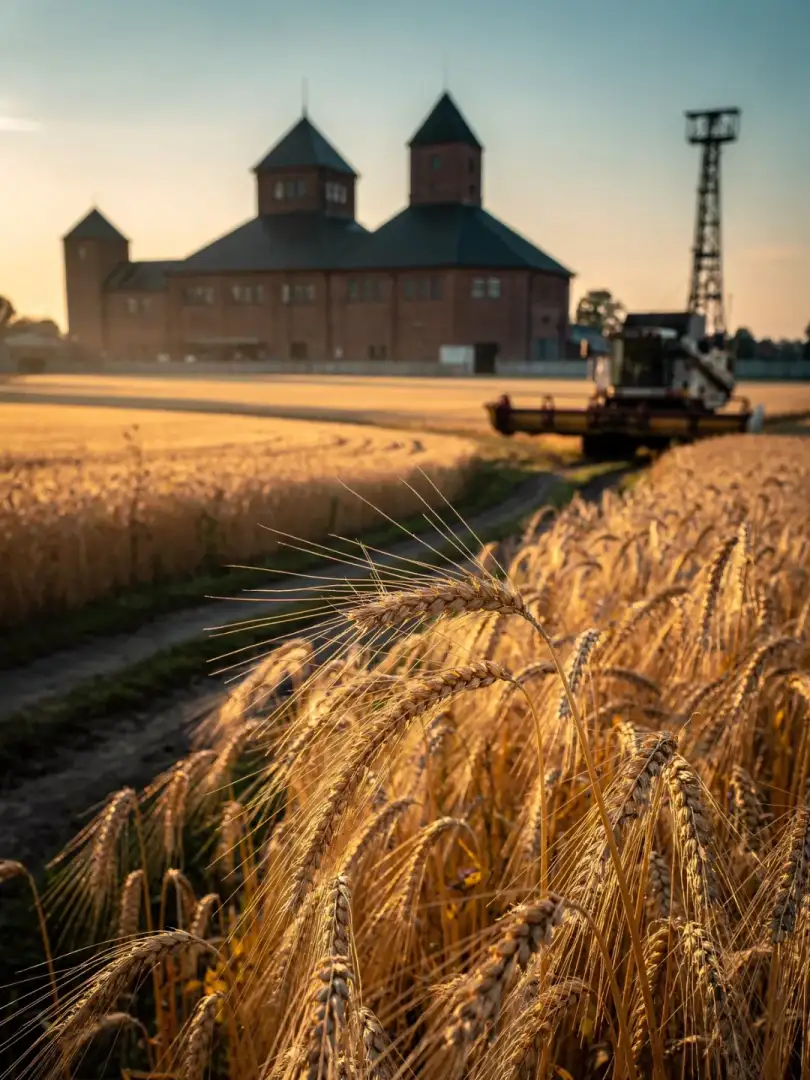
Brewers speak of barley specifically as malting barley, since not every variety will do. It needs to germinate evenly and contain enough starch without too much protein. Poland is a major grain-growing country, and barley grows in the fields between Upper Silesia and Lesser Poland just as it does in Greater Poland.
It's worth looking back at history here. The 19th-century shift was crucial. When bottom-fermented beers were introduced in Tychy, pale, evenly kilned malt became essential. Pale lagers require a controlled kiln where the temperature can be precisely managed.
Darker beers add roasted specialty malts, which the brewer blends in small proportions. A pale lager, however, sticks to Pilsner malt, and that's exactly where its character lies: it tastes of grain and fresh bread, not of roast, caramel, or smoke.