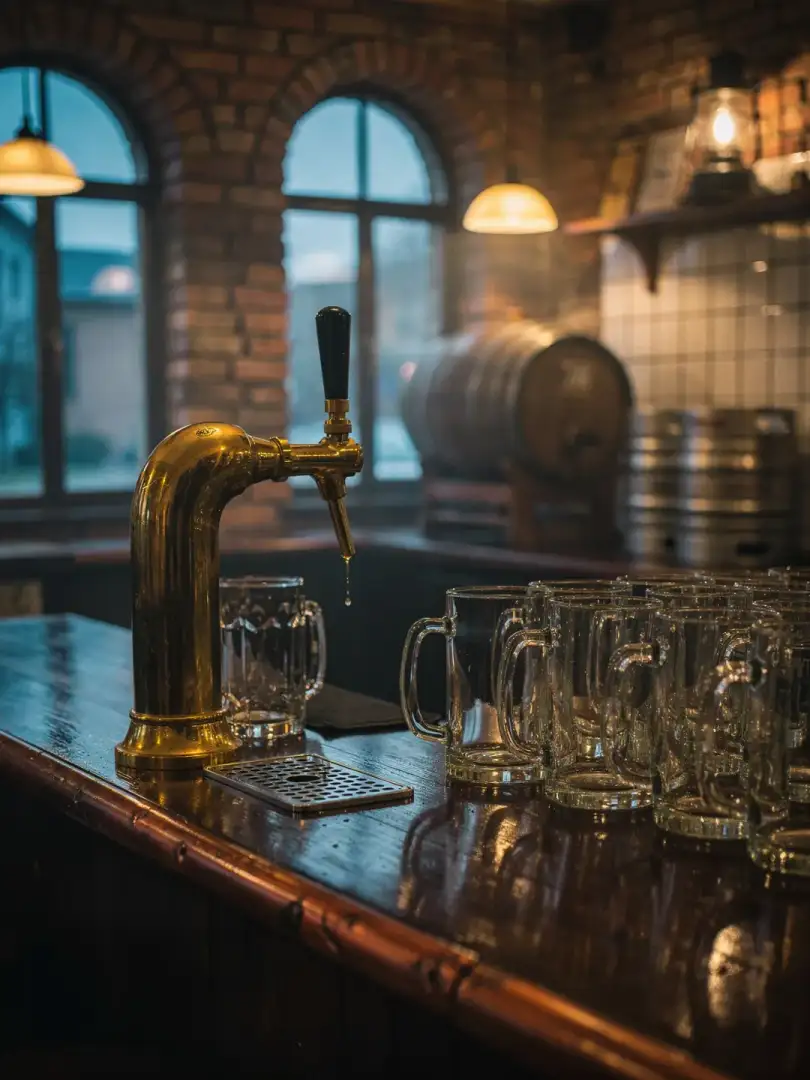
Mug and Tap
Tasting
What does an Upper Silesian lager taste like? It smells of fresh bread with a touch of grass, drinks smoothly, and finishes with a light bitterness. A good example is Tyskie Gronie, the brewery's standard pale beer from Tychy, which makes for a fine comparison with a German pilsner.
For comparison, try Lech from Poznań, also part of Kompania Piwowarska, and Żywiec from the Beskids. This lets you taste just how different lagers can turn out across three regions of one country, even when two of them are brewed under the same corporate roof.
The right glass in Poland is the kufel, a handled mug, or a slim pokal-style glass. For pale lagers, clear glass matters most, so you can see the color and the head. A glass should be rinsed clean and left wet beforehand, which helps the foam last longer.
What's the right serving temperature? The beer is best enjoyed at about six to eight degrees Celsius. Too cold, and flavor and aroma disappear; too warm, and it turns sweet and heavy. When pouring, tilt the glass and straighten it toward the end, so a firm white head of foam forms.
Anyone wanting to learn more about the journey from grain to glass can visit the Browarium museum in Tychy. It tells the story of the Princely Brewery and the craft behind it. Glasses, taps, and casks are on display there, just as in any tavern in the region, and if you like, you can compare the taste fresh from the tap with that from the bottle. The difference usually lies in the foam and in freshness.