Cold-Fermented
Yeast & Fermentation
The yeast in a lager like Super Bock works cool and slow. Bottom-fermenting means the yeast sinks to the bottom after fermentation, and it works at low temperatures, usually between eight and twelve degrees Celsius.
This yeast is a hybrid. Saccharomyces pastorianus arose centuries ago from the crossing of two species—a brewer's yeast and a wild yeast that wasn't described until 2011, in Patagonia. In 1883, Emil Christian Hansen succeeded in isolating it as a pure culture at the Carlsberg laboratory in Copenhagen.
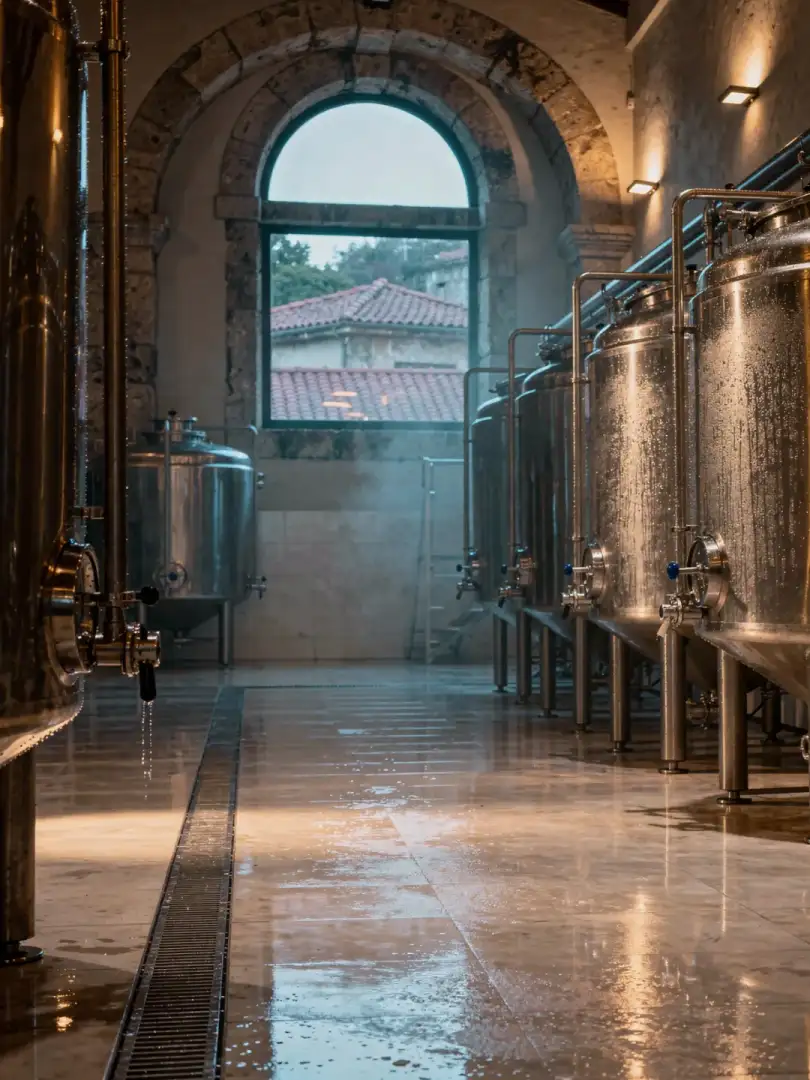
The link to Portugal is a coincidence, but a nice one: Carlsberg now holds a stake in the Super Bock Group. Breweries of this size work with pure cultured yeast so that every batch tastes the same, fermenting in large, cylindrical stainless steel tanks.
After primary fermentation comes lagering. The young beer rests for several weeks at temperatures near freezing, the yeast settles out, and immature aromas like buttery notes and green apple fade away. The name lager means exactly that: to store.
The opposite is ales, made with top-fermenting yeast that ferments at 18 to 22 degrees Celsius and tastes fruitier. The small craft breweries in the north brew these too. A lager like the one from Leça do Balio, by contrast, tastes clean and quiet.
Time plays a role too. Industrial breweries shorten fermentation and maturation through pressure, temperature control, and filtration, so a batch is ready in cask or bottle within weeks. Small brewers tend to take more time and often bottle unfiltered.