Delicate Bitterness
Hops
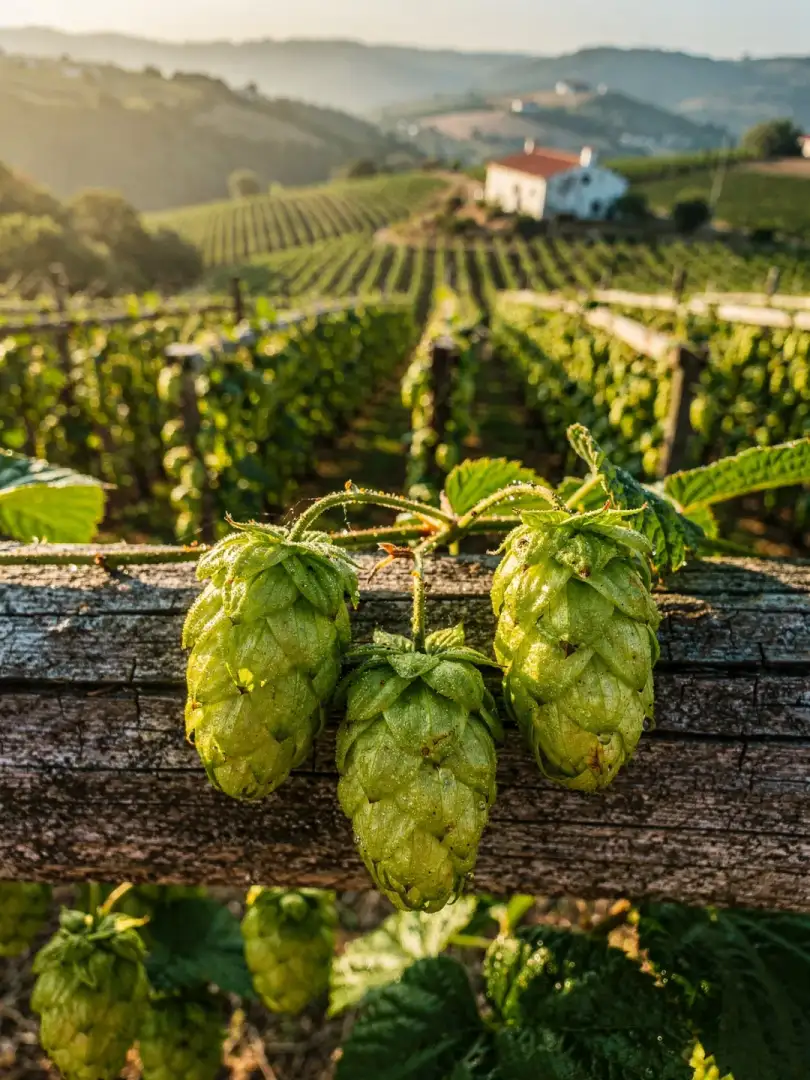
A Super Bock Original tastes restrained in its bitterness, and that's exactly the intent. The bitterness comes from hops, a climbing plant whose cones contain resins. These resins release only during the boiling of the wort, giving the beer its bite.
Commercial hop growing is the exception in Portugal. The hops for a Portuguese lager come from abroad. Classic sources for pale lagers are the Hallertau, whose hops are protected as a PGI, and Žatec in Bohemia with Žatecký chmel, a PDO.
Brewers distinguish between bittering hops and aroma hops. Bittering hops boil long in the wort and lend bitterness. Aroma hops go into the kettle late and bring fragrance—hay, herbs, or citrus—because their volatile oils haven't yet boiled off.
Bitterness is measured in IBU, International Bitterness Units. According to the BJCP competition guidelines, an international pale lager sits at 18 to 25 IBU. A German Pils reaches 22 to 40, a Bohemian one 30 to 45.
Craft breweries like Musa often take a different approach. They use more hops to brew beers like IPA that explicitly taste of fruit and resin. The great lager of the north, by contrast, stays deliberately mild, so it's refreshing ice-cold and easy to drink in larger quantities.
How much hop character a beer has depends on the style. A lager needs little of it, while an IPA needs many times more. That makes bitterness a useful guide for beginners: order a light Fino along the Douro or in the Minho, and the hops will play a quiet supporting role, not the lead.