A Week of Fermentation
Yeast & Fermentation
Gotlandsdricka is an ale, meaning it's top-fermented. Top-fermented means the yeast works at room temperature and gathers on top of the fermenting liquid. Today, plain baker's yeast is often used, but in the past farms kept their own yeast cultures going.
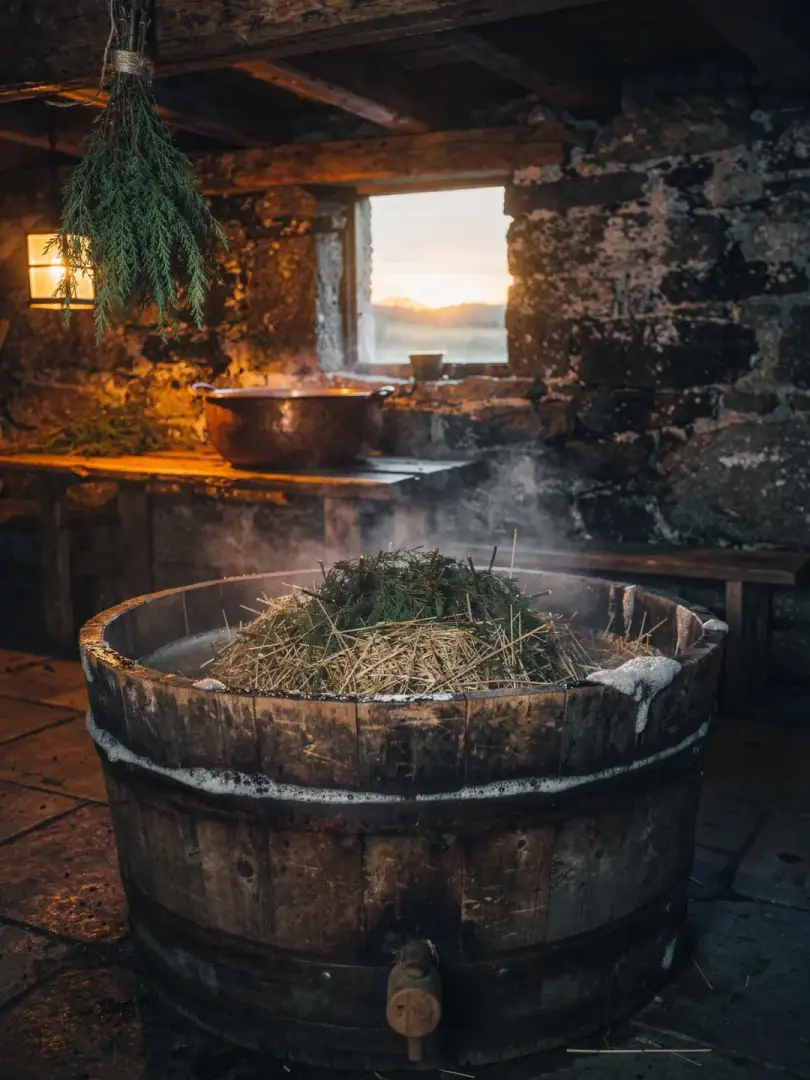
Fermentation traditionally takes place in the rostbunn, a vat with a tap at the bottom. The wort is first lautered there, then set to ferment. The tap allows the beer to be drawn off without disturbing the sediment.
Fermentation takes about a week. After that, the beer should be drunk within two weeks, since dricke is a young drink. It's often enjoyed while still actively fermenting, meaning it can have a light fizz and a touch of sweetness. There's no lagering cellar here as with Pils or Märzen—aging simply isn't the goal.
Alcohol content varies widely. Figures for Gotlandsdricka range from 3 to 12 percent, with 4 to 5 percent being typical. This depends on how much malt and sugar the brewer adds to the mash and how long the yeast is left to work.
At Gotlands Bryggeri in Visby, fermentation looks quite different: there, two copper kettles and two brewmasters run the batches in proper brewery fashion. The rostbunn remains the domain of home brewers, who compete against each other every autumn at the World Championship in the south of the island. So the island's beer has two faces: that of the farmhouse and that of the town brewery.