Juniper Before Hops
Hops
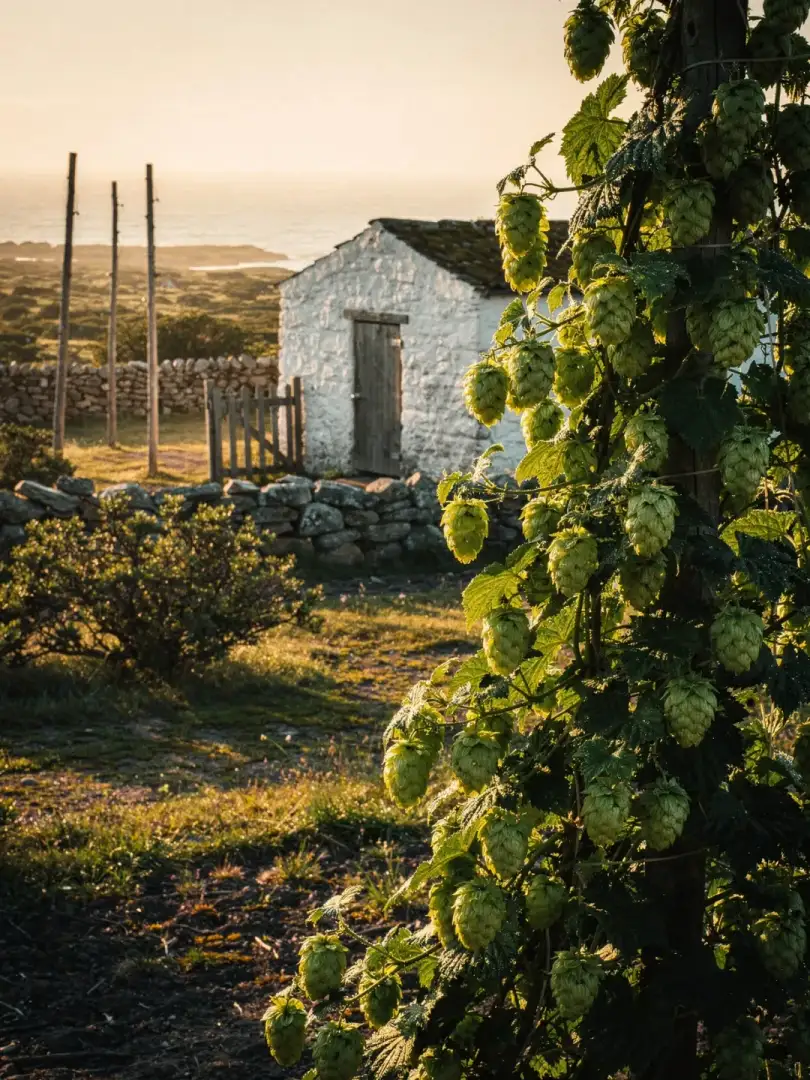
Juniper is the true seasoning of Gotlandsdricka; hops play second fiddle. When hops arrived in Scandinavia in the 13th century, they were added to the recipes, but only in small amounts. The Swedish homebrewers' association describes the hop addition as very low.
Both branches and berries of the juniper are used. The branches serve as a filter in the rostbunn, while the berries and needles lend a resinous quality and a slightly bitter edge. This bitterness partly replaces what hops provide elsewhere: a counterpoint to the sweetness of the malt.
Originally everything came together on the farm. Farmers malted their own grain, grew their own hops, and kept their own yeast. There are no historical records of cultivation areas or varieties on Gotland, and the island has never known a hop-growing region like the Hallertau.
Bitterness is measured in IBU, a scale for the bittering compounds in beer. Depending on the style guidelines, a Pils often sits between 22 and 40 IBU, while a Sahti, the closest relative of Gotlandsdricka, ranges from 0 to 15. There's no official standard for Gotlandsdricka, but the flavor is well documented: bittersweet, full-bodied, spicy, with a clearly noticeable juniper character.
Anyone drinking a beer from Gotlands Bryggeri, such as the Wisby Klosteröl, will taste the kind of bitterness you'd expect from a brewery beer. With dricke, by contrast, the astringency comes from juniper rather than hop cones. Taste both side by side, and you'll notice the difference from the very first sip: here, clean, crisp bitterness; there, resin, smoke, and a lingering sweetness.