The Island's Smoked Malt
Malt & Grain
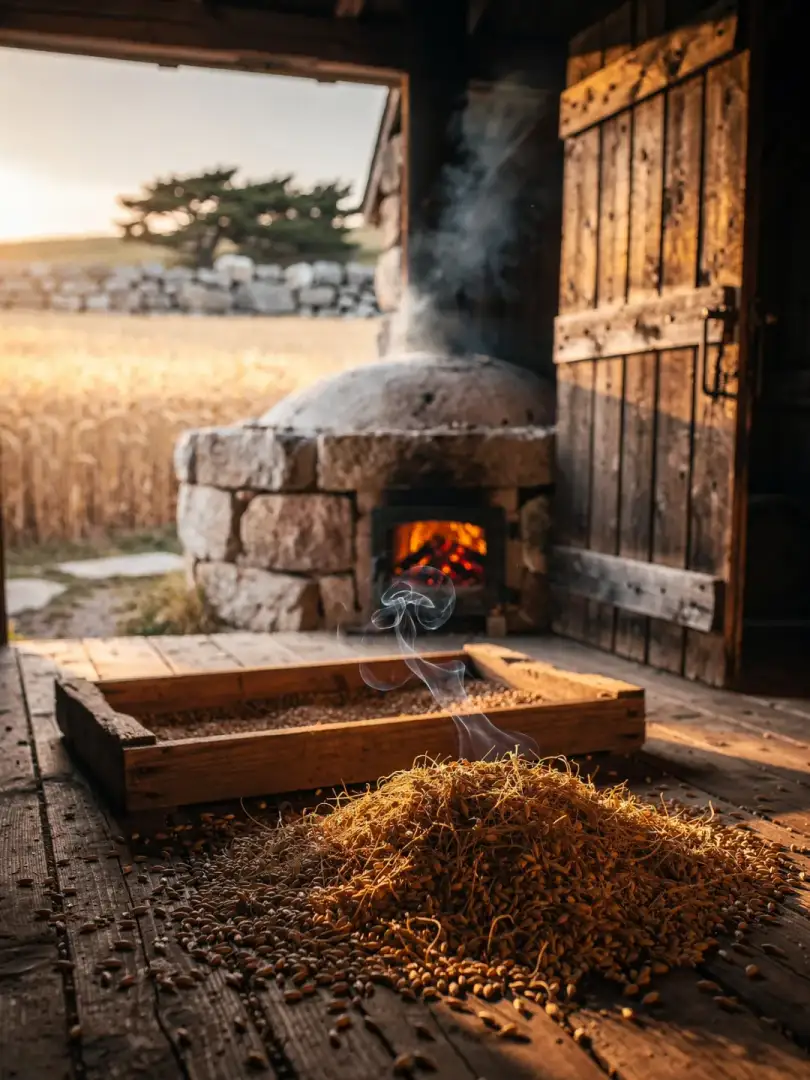
Smoke is what makes Gotlandsdricka recognizable. The malt—grain that has been allowed to germinate and then dried—is kilned over a fire for this purpose, and the smoke stays in the grain. On Gotland, the result is called rökmalt.
According to tradition, barley was the islanders' grain of choice. Rye was only used when there was no alternative, which was rare. Later recipes also mention wheat and oats, reflecting a wide range of variety.
There were many approaches to kilning. The malt was dried either over the smoke of a fire or in hot air channeled through pipes, and nearly every farm had its own opinion on which wood to use and whether to include the bark or not. The Swedish homebrewers' association SHBF describes traditional dricke as using Gotland smoked malt, smoked over alder. Its brewing wiki lists 'Gotländsk rökmalt' as its own entry.
Originally, all of this was handwork done on the farm. The grain was soaked, allowed to germinate, had its germination halted through drying, and was smoked along the way. Anyone who malted this way shaped their beer's character long before brewing even began, since the smoke defines it already at the malt stage.
Sugar is also added, as called for in the recipes. It supplies extra fermentable material for the yeast and gives the beer a bit more strength. Unlike Bamberg's rauchbier, which is bottom-fermented and made with beechwood smoke, here juniper stands as an equal partner alongside the smoked malt. Anyone trying a beer from Gotlands Bryggeri in Visby, though, will taste more classic brewery malts instead.