Jura & Rhine Gravel
Water & Soil
Around Basel, the Jura mountains meet the Upper Rhine. The range is largely made of limestone, and rainwater passing through such rock picks up dissolved lime. Water from the region therefore tends to be hard. For brewers, that means it's high in carbonate, which makes the mash less acidic and favors darker malts.
Pale beers are easier to brew with soft water, with the Pilsen basin in the Czech Republic serving as the classic example. Anyone wanting to brew pale lager in Northwest Switzerland therefore often has to adjust their water. This is standard practice at Feldschlösschen and the Basel breweries, since nearly all breweries today treat their water, whether through softening, filtering, or targeted mineral additions.
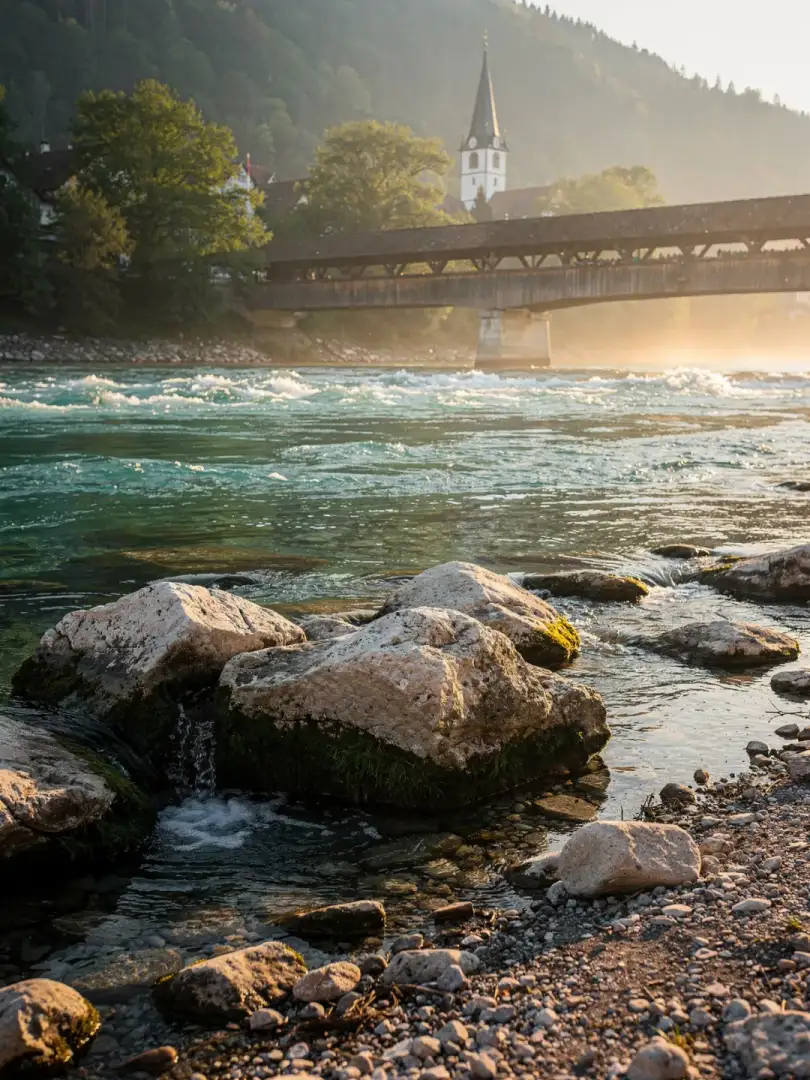
For centuries the Rhine has shaped the region's economy, serving as water source, transport route, and border all at once. Rheinfelden even sits atop a salt deposit and is known as a spa town where warm saltwater from underground is put to use.
Cool cellars once did the work without any refrigeration technology. Bottom-fermented beer needs low temperatures, and in the era before refrigeration brewers sought out underground spots or locations by the water that stayed cool even in summer. In the Fricktal and around Basel, such spots were found on the slopes above the Rhine.
There's no distinct water profile for Northwest Switzerland the way there is soft Pilsen water or hard Burton water. How the water is treated matters more than its source.