Cold and Slow
Yeast & Fermentation
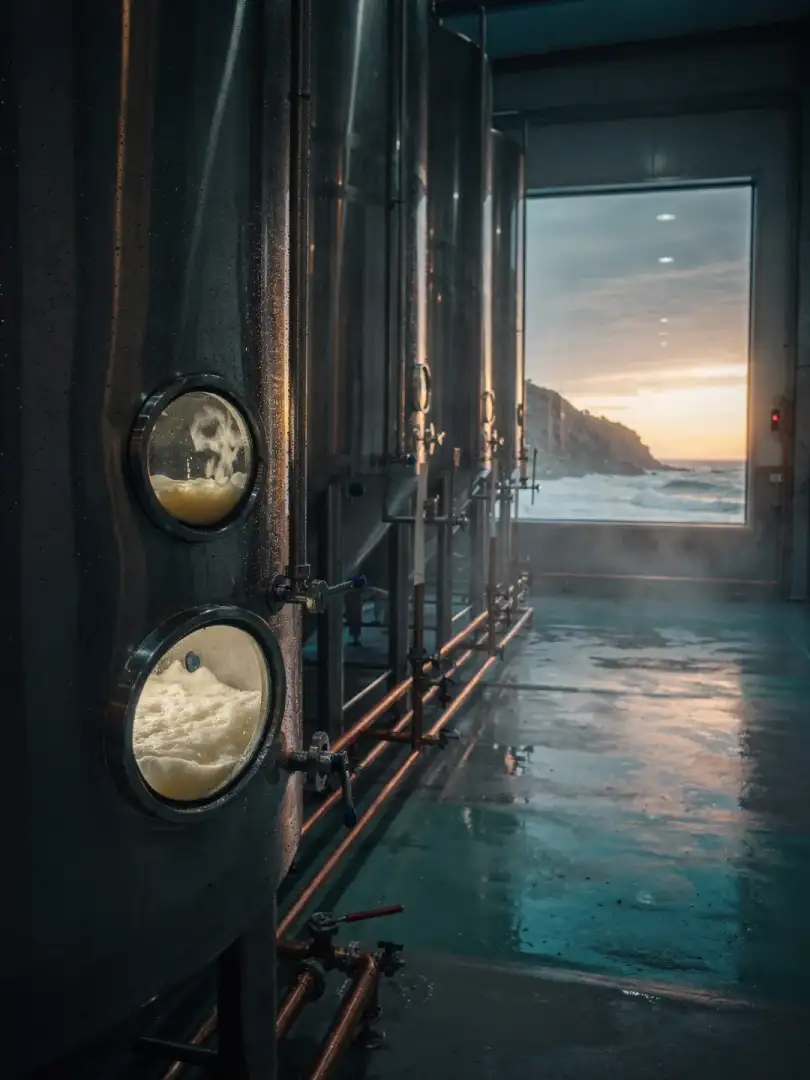
Whether Estrella Galicia qualifies as a lager comes down to the yeast. Lager means bottom-fermented: the yeast works at low temperatures, usually between about 8 and 12 degrees Celsius, and settles to the bottom of the tank by the end of fermentation. The result is a clean beer without fruity side notes, where malt and hops take center stage. The yeast converts the wort's sugar into alcohol and carbon dioxide. For lager, primary fermentation usually takes about a week, and the tanks are cooled since fermentation itself generates heat.
Lager yeast is a hybrid of two yeast species—ordinary brewer's yeast and a wild yeast first described in Patagonia in 2011. It was isolated as a pure culture in 1883 by Emil Christian Hansen at the Carlsberg laboratory in Copenhagen. Which specific strain Hijos de Rivera uses, the brewery doesn't disclose.
After primary fermentation comes maturation at temperatures near freezing. The beer rests for weeks during this stage—hence the name: lager comes from the German word for storage, essentially meaning "stored beer." Unfinished flavors like buttery notes break down during this time, the yeast settles, and the beer turns clear. Carbonation also binds better into the beer in the cold, which is why it later produces a finer effervescence.
According to the manufacturer, 1906 Reserva Especial gets one of the longest maturation periods among lagers. More original gravity and more alcohol need more time to harmonize. It's brewed at the A Coruña plant.