Sour Instead of Bitter
Hops
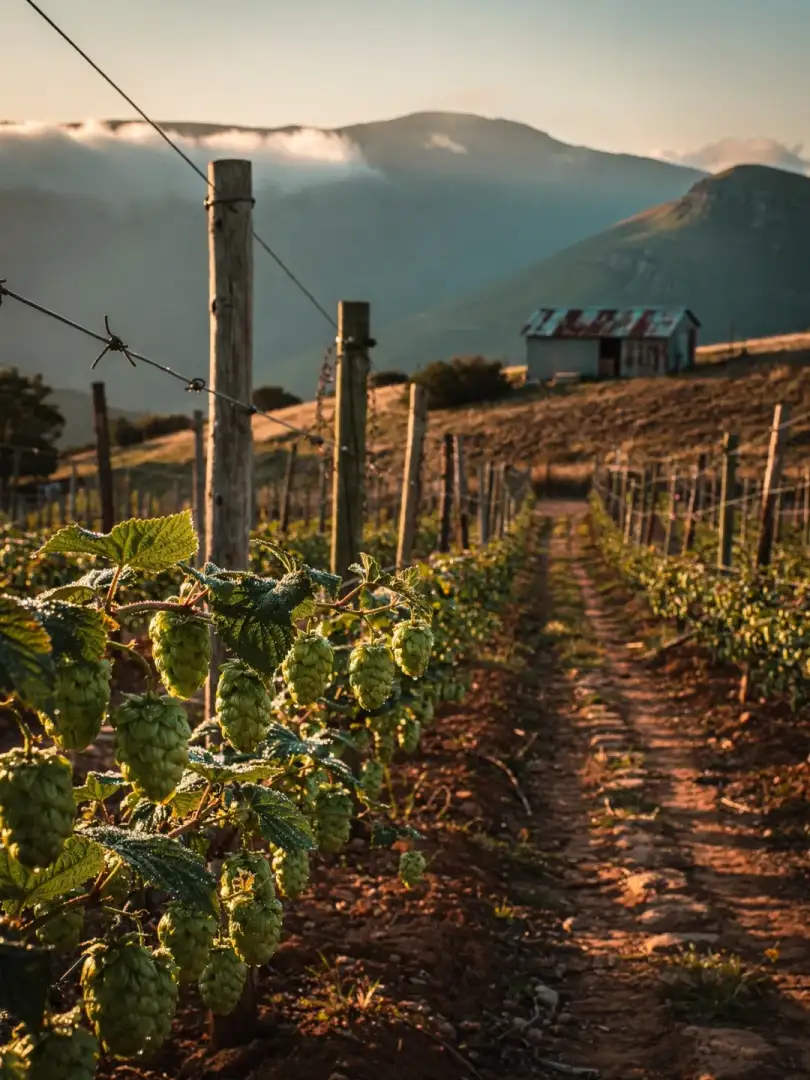
Are hops grown in Gauteng? No, no hops grow in Johannesburg. The hops for South Africa's lagers come, as far as is known, from the Western Cape, around the town of George, with some varieties sourced from abroad. Johannesburg brewers buy them in pellet form.
Hops are entirely absent from Umqombothi. The ingredient list names maize, maize malt, sorghum malt, yeast, and water, which means there's no counterweight to the sweetness. Instead of bitterness, acidity provides the balance. The beer therefore tastes tart, with a slight tang from fermentation, and nothing at all like hops.
Anyone accustomed to a European pilsner will search in vain for hop bitterness in Umqombothi. It's measured in IBU, a unit of bitterness. An international pale lager under BJCP guidelines falls between 18 and 25 IBU, a German pilsner between 22 and 40. A sorghum beer has no such standard.
The lagers from the big breweries tend to be hopped fairly conservatively. Castle Lager tastes malty, slightly tangy, and dry on the finish, without any single aroma standing out. It's a thirst-quencher for hot days and long evenings at the braai.
The small breweries lean more heavily into hop aroma. Pale ales and other modern styles in Johannesburg get citrus, fruit, and resin notes from both imported and South African varieties. The selection is usually seasonal and limited, since hops are expensive and the market is small.
The difference between the two worlds is easy to taste. You drink the lager for its freshness, Umqombothi for its tartness and body. Both are considered proper beer in their respective settings, just by different rules.