Pot, Acid, Tank
Yeast & Fermentation
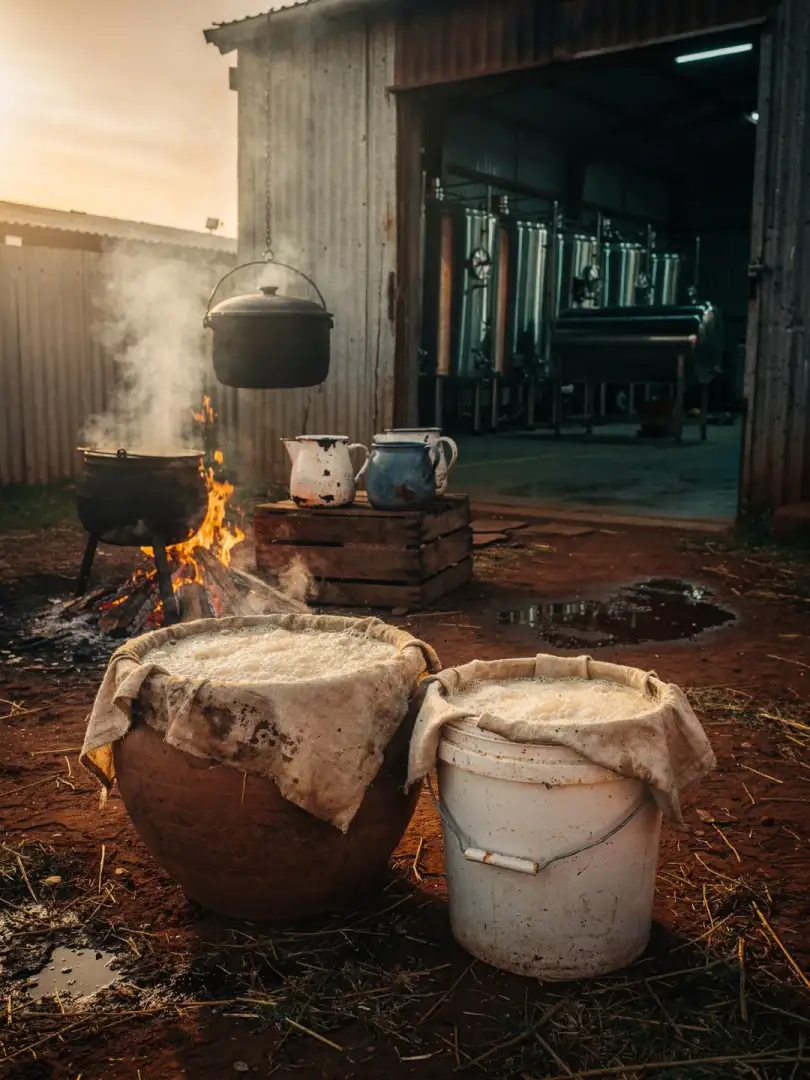
How is Umqombothi brewed? At home, it's made in a large iron pot called a potjie. Maize meal, malted maize, and malted sorghum are mixed with warm water and left to stand overnight. It already begins bubbling at this stage, since microorganisms live on the malt and in the mash. The mixture ferments at first without any added yeast.
Afterward, part of the mash is set aside. The rest is boiled until a crust forms on the bottom of the pot. Later, everything is combined again, left to cool, and more malt is added. At this point, the remaining starch converts into sugar, and fermentation picks up pace.
So it ferments as a mixed culture. Lactic acid bacteria give the beer its tartness, while yeasts produce the alcohol. Because fermentation happens at room temperature, it moves quickly. Depending on the weather, the beer is drinkable after one to two days and only keeps for a short time. There's no finished product with consistent quality; every batch tastes a little different.
With Chibuku, the yeast stays in the carton, and the solids sink to the bottom. That's why you have to shake the drink before the first sip, which is where the name Shake-Shake comes from. The name Chibuku itself comes from Max Heinrich, who used to jot down customers' requests and changes in a notebook.
The big breweries in Alrode, by contrast, brew with bottom fermentation, meaning lager yeast at cool temperatures. The beer matures in tanks, gets filtered, and is then bottled or canned. It's clear, stable, and consistent from bottle to bottle.
Small brewers like the Soweto Brewing Company work with stainless steel tanks, just like any craft brewery. Their beers bear little resemblance to the township's traditional home brews, though they're made in the same neighborhood.