Mind the Residual Alcohol
Non-Alcoholic Beer in Pregnancy, Driving and with Medication
Non-alcoholic beer can contain residual alcohol, up to 0.5% ABV. During pregnancy, the DGE and BZgA recommend complete abstinence from alcohol, making a 0.0% beer the safer choice. What applies for drivers, new drivers, and with medication, explained factually and without replacing medical advice.
Non-Alcoholic Beer in Pregnancy: What Do Experts Recommend?
For pregnancy, there's a clear line. The German Nutrition Society states in its 2024 position paper that pregnant and breastfeeding women should abstain from alcohol entirely. The Federal Centre for Health Education (BZgA) has promoted the same message for years. The reason: no amount of alcohol is known to be safe for the unborn child. Alcohol passes to the child via the placenta.
A non-alcoholic beer with up to 0.5% ABV contains small amounts of alcohol. The exact amount isn't always on the label. A Canadian study from 2010 examined 45 drinks sold as alcohol-free or low-alcohol. In 13 of them, the measured content exceeded what was stated, and six supposedly alcohol-free drinks had more than 1%. That concerned the Canadian market and says nothing about a specific German beer. But it does show that label and contents can diverge.
Anyone craving the taste during pregnancy is therefore best off choosing a beer explicitly labeled 0.0%, and discussing it with their doctor or midwife. The same applies during breastfeeding.
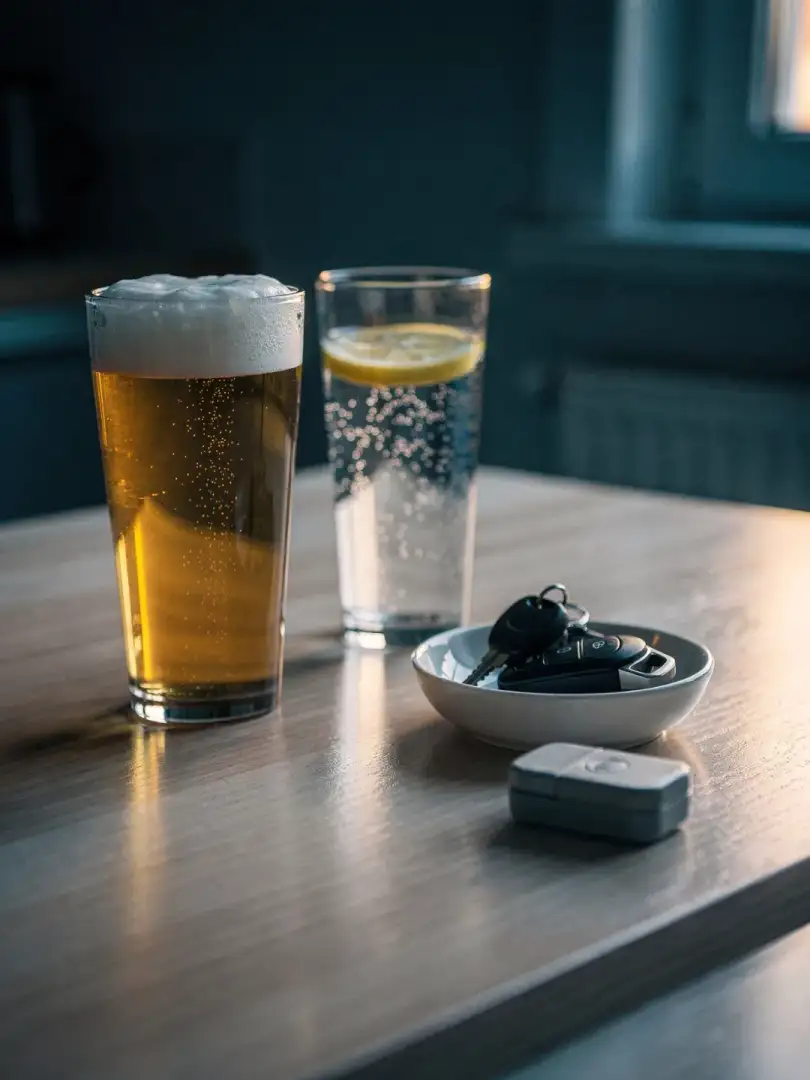
Non-Alcoholic Beer and Driving: What's the Rule?
First, a distinction that often gets muddled. Percent ABV describes the alcohol in the drink, while blood alcohol content (BAC), measured in per mille in Germany, describes the alcohol in the blood. In Germany, the legal limit behind the wheel is 0.5 per mille; anyone showing impairment even below that can still be prosecuted. For new drivers on probationary licenses and everyone under 21, an alcohol ban applies, colloquially the 0.0 per mille limit.
With typical amounts of non-alcoholic beer, almost nothing is measurable in the blood, because the body breaks down the small quantities quickly. Residual alcohol isn't entirely ruled out, though, and content varies from product to product. New or professional drivers who want to be absolutely safe should choose 0.0% beer or another drink. And anyone who's already had regular beer won't get more sober by switching to a non-alcoholic one afterward.
A rough calculation shows the scale involved. A half liter at 0.5% ABV contains just under 2 grams of pure alcohol, while a half liter of pilsner at 5% ABV contains around 20 grams. The difference is roughly tenfold. How high the level rises in the blood depends on body weight, sex, food eaten and drinking speed. There's no reliable calculation for individual cases. Anyone who needs to drive is better off relying on the rule than on a guess.
Medication and Non-Alcoholic Beer
Some medications don't mix well with alcohol, and a few react even to very small amounts. This is well known for disulfiram, which is specifically designed to cause an intolerance to alcohol, and for certain antibiotics. For some older antidepressants, MAO inhibitors, experts also warn against foods high in tyramine, a substance found in some beers. Whether a specific medication is affected is stated in the package insert. When in doubt, the pharmacy is the right place to ask, not an article about beer.
Non-Alcoholic Beer After Alcohol Dependence
A separate case concerns people who have been or are alcohol-dependent. Taste, smell, bottle and ritual resemble familiar beer. Addiction counseling services point out that precisely this similarity can trigger cravings for alcohol, regardless of residual alcohol content. Many therefore advise against it. Anyone affected is best off discussing this with their own counseling service or therapy. For everyone else, non-alcoholic beer remains a good way to drink less alcohol without giving up the taste of beer.