The Three Rules
Beer with Food: The Three Basic Rules
Beer works with food when one of three rules applies: the beer echoes flavors in the dish, it provides a counterpoint, or it clears the palate. Add to that the rule of thumb for strength: hearty food needs a hearty beer, delicate food a gentle one.
Why Does Beer Pair So Well with Food?
A glass of beer brings tools to the table that wine lacks. Carbonation, the dissolved CO₂, fizzes across the tongue and lifts fat and protein off the palate. Hop bitterness acts like a drop of lemon or a leaf of arugula: it cuts through cream and butter. Malt delivers bread, toast, and caramel notes that connect directly with crust, pan drippings, and roasted vegetables. And because beer usually has less alcohol than wine, the palate stays alert longer.
Then there's the sheer range. Between a light beer at 2.4% and an Imperial Stout at 12%, you'll find almost every color, sweetness, and bitterness a kitchen could need. Brooklyn brewmaster Garrett Oliver did a great deal to get beer taken seriously at the dinner table with his 2003 book, "The Brewmaster's Table." The rules beer sommeliers work with today are simple. They fit into three words: echo, contrast, freshness.
Rule One, Echo: Matching Flavors Reinforce Each Other
Matching like with like is the easiest rule. A dark lager with bread and nut notes meets the brown crust of a roast pork shoulder, and both taste rounder for it. A Bamberg smoked beer finds its partner in smoked ham. The reason lies in chemistry: the Maillard reaction, the browning of sugar and protein under heat, happens on the kiln, the malthouse's drying oven, just as it does in the pan.
Echo needs balance. Double up on one note too strongly and it turns monotonous: a sweet doppelbock next to a sweet caramel sauce creates a sticky wall. Mirroring works best when there's a shared note, while each partner still brings something of its own, say, roasted malt and pepper, or yeast-driven fruit and herbs.
Rule Two, Contrast: Opposites That Complement
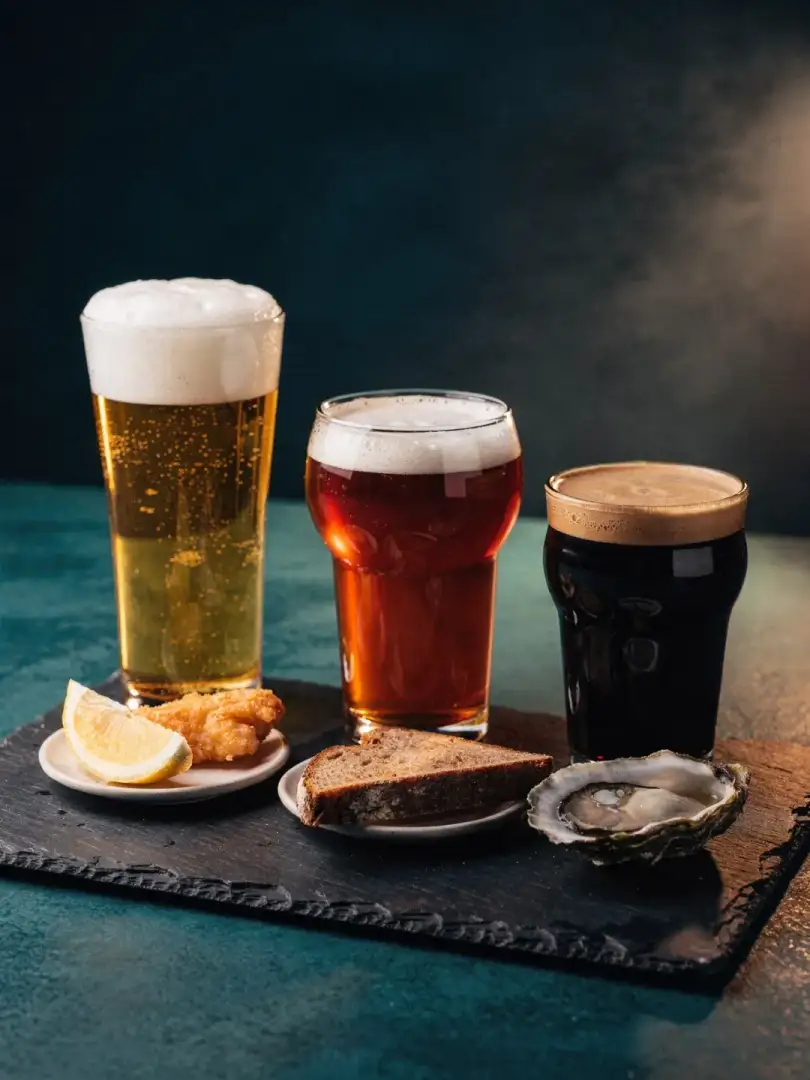
With contrast, the beer makes up for what the food lacks, or reins in what's too loud. A dry, roasty stout next to salty oysters is the best-known example: the sea tastes salty and mineral, the beer dark and bitter, and together they create something new. The same principle works with a tart gueuze against rich cheese, or a fruity kriek against dark chocolate.
Contrast is the riskier rule, because basic tastes influence each other. Salt dampens bitterness, which is why a bitter pilsner tastes milder next to herring than it does alone. Heat and bitterness, on the other hand, amplify each other. Sweetness in beer tames salt and chili, while acidity in beer lifts rich dishes. Anyone working with contrasts should understand these interactions before pairing two loud partners together.
Rule Three, Freshness: Carbonation and Bitterness Clean the Palate
The third rule is beer's real strength. After a bite of pork belly, fries, or cheese fondue, a film of fat coats the tongue. Zesty carbonation and clean hop bitterness break it up, so the next bite tastes as fresh as the first. A North German pilsner manages this, as does a Kölsch with its lean, highly attenuated character. Highly attenuated means the yeast has converted nearly all the sugar into alcohol and CO₂, leaving the beer tasting dry.
Finally, there's strength. A beer shouldn't overwhelm the food, or vice versa. A Helles with 16 to 22 bitterness units (IBU, a measure of dissolved hop bittering compounds) would get lost next to a venison goulash, while a barley wine at up to 12% would drown any trout. When in doubt, sort first by weight: for the dish, by fat, seasoning, and roast level; for the beer, by original gravity (the dissolved malt extract before fermentation), alcohol, and color. Only then bring in echo, contrast, and freshness.