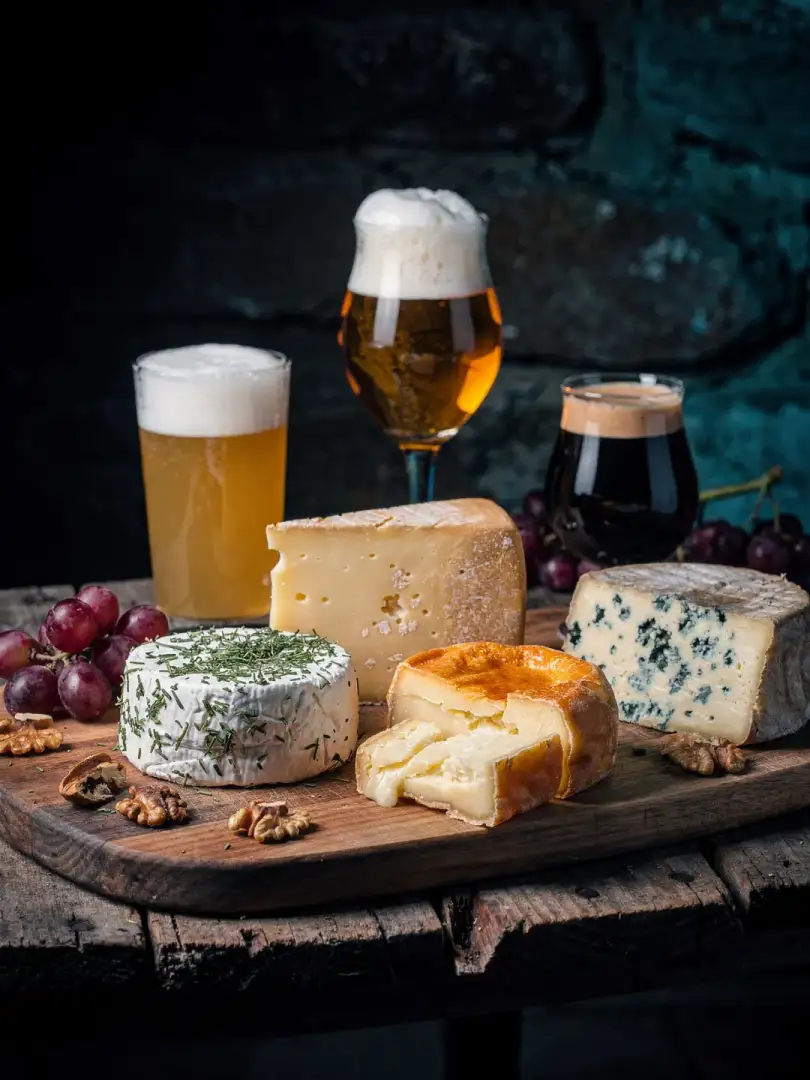
Cheese and Beer
Beer and Cheese: Which Beer Goes with Which Cheese?
Beer often pairs better with cheese than wine does, because carbonation breaks down milk fat and malt picks up on the nutty, salty notes of aged cheese. The basic rule: fresh cheese with fresh, light beers; hard cheese with malty beers; blue cheese with strong, sweetish beers.
Why Do Beer and Cheese Pair So Well?
Cheese and beer share a common origin: both come from the farm and the monastery, both depend on raw materials from the field, on microbes, and on time. On the palate, they meet at many points. Malt brings bread, nut, and caramel; aged cheese does too. Yeast contributes esters, fruity aromatic compounds from fermentation that recall pear, banana, or apple, and these pair well with soft and washed-rind cheeses.
The second reason is mechanical. Cheese is fatty, and fat coats the tongue. The carbonation in beer foams this film away, and hop bitterness cuts through it. Red wine has a harder time: its tannins, the compounds from skins and seeds, can turn metallic or bitter when combined with salt and fat. That explains why several beers often pair more easily with a mixed cheese board than a single red wine would.
Fresh Cheese and Goat Cheese: Which Beer Fits?
Young goat cheese, ricotta, or an herbed quark are tangy, creamy, and delicate. A heavy beer would overwhelm them. Pale, zesty beers with their own freshness work well: a Belgian witbier with coriander and orange peel, a dry saison with peppery yeast character, or a Berliner Weisse with its mild lactic tang and just 2.8 to 3.8% alcohol. The acidity in the beer picks up on the acidity in the cheese, while the carbonation keeps the whole pairing light.
Witbier and Hefeweizen are often confused, but on the cheese board the difference becomes clear. Belgian witbier contains unmalted wheat, coriander, and bitter orange peel, giving it a citrusy, spiced character. Bavarian Hefeweizen is unspiced; its banana and clove notes come entirely from the yeast. With goat's milk fresh cheese and herbs, the witbier feels fresher; with a mild soft cheese, the Hefeweizen feels rounder.
Hard Cheese, Mountain Cheese, and Washed-Rind: Malt and Yeast as Partners
The longer a cheese ages, the more protein breaks down into savory, nutty compounds, sometimes with little crystals that crunch between the teeth. A mountain cheese like this, or an aged Gouda, calls for a beer with malt body. A Märzen with bread and light caramel notes, a dark bock, or a doppelbock with dried fruit character suits it better than a lean pilsner. The echo between the nutty rind and the malt carries the whole pairing.
Washed-rind cheeses like Limburger, Romadur, or Époisses smell of the barn and the cellar, but often taste milder than the nose suggests. Belgian monastery beers are right at home here. Some Trappist abbeys make their own cheese, Chimay and Orval among them, and serve it alongside their beer. A Tripel at 7.5 to 9.5% with spicy yeast character, or a Dubbel with a raisin note, stands up to the aroma and washes away the fat.
Blue Cheese and Camembert: Sweetness Against Salt
Blue cheeses like Roquefort, Gorgonzola, or Stilton are salty, sharp, and fatty all at once. Here the contrast rule comes into play: a sweetish, strong beer tames the salt. Beer sommeliers often recommend a barley wine with Stilton, an English strong ale style at 8 to 12% with honey and dried fruit notes, which comes remarkably close to port on the cheese board. An Imperial Stout with cocoa and roast character achieves something similar, as does an Eisbock.
White-rind cheeses like Camembert or Brie taste milder and mushroomy. A Kellerbier, an unfiltered, yeast-hazy lager, or an amber Vienna lager suits the soft rind well. When arranging a platter with several cheeses, it's best to work in one direction: from mild to strong cheese, and from pale, light beer to dark, strong beer. That way no glass overshadows the next.